I smell the wet concrete after a summer storm and the metallic tang of old padlocks when I walk past storefronts that Google has marked as nonexistent. To the average digital marketer, a Google Business Profile is a data entry task, but to a street photographer and a map-spam investigator, it is a physical anchor in a shifting digital terrain. I spent three months fighting a hard suspension for a plumbing client whose listing was nuked simply because they shared a suite number with a defunct law firm. Google did not want proof of a van; they wanted proof of a utility bill under the exact GPS pin, showing the physical keys turning in a physical lock. This is the reality of modern local search, where winning a hard suspension appeal requires the precision of a forensic architect rather than the generic promises of a desk-bound SEO.
The ghost in the GPS coordinates
Video verification for Google Business Profile is the primary method for proving physical existence to an algorithm that no longer trusts static imagery or scanned leases. This process requires a continuous, unedited video that bridges the gap between the public street and your private office space to eliminate any suspicion of virtual office usage or address rental fraud. When you engage what a real Google maps SEO company does, you quickly realize that verification is about spatial continuity. The algorithm is looking for specific markers, like street signs and neighboring businesses, to triangulate your position within the local grid. If your video fails to show the transition from the exterior world to the interior desk, the AI assumes you are faking the location with a green screen or a clever edit. You must understand that local intent is not a keyword choice; it is a distance-weighted signal where relevance is secondary to the physical location of the user mobile device. This is why proving a fake address suspension is wrong depends entirely on your ability to document the micro-geometry of your storefront. I have seen profiles vanish because the camera did not linger long enough on the street number for the OCR to read it clearly. It is a game of millimeters.
“Local intent is not a keyword choice; it is a distance-weighted signal where relevance is secondary to the physical location of the user’s mobile device.” – Map Search Fundamental
Why your physical address is a liability
The physical address of your business acts as a liability if it resides in a high-spam category or shares a footprint with flagged virtual office providers like Regus or WeWork. Google has mapped every known co-working space and temporary office suite in the world, and if your pin lands on one of these hotspots, your visibility will be throttled or removed. Many entrepreneurs fall into the trap of using risky virtual offices for Google maps, only to find their rankings buried under the “suggested edit” loop. The algorithm uses neighborhood signals to verify your service area, checking if your business category matches the surrounding zoning laws. If you claim to be a heavy equipment repair shop but your GPS pin is in the middle of a high-rise residential district, the system flags the discrepancy. This is where local SEO services to fix NAP inconsistencies become vital, as they must reconcile the digital footprint across dozens of directories with the raw reality of your physical entrance. If the address on your utility bill has a typo in the suite number, it creates a ripple effect that destabilizes your proximity authority. I have seen rankings die simply because a business owner updated their name to include keywords, triggering a manual review that the physical storefront could not survive. You need to audit your business name for local SEO safety before you ever press the record button on a verification video.
Local Authority Reading List
Forensic video evidence for local verification
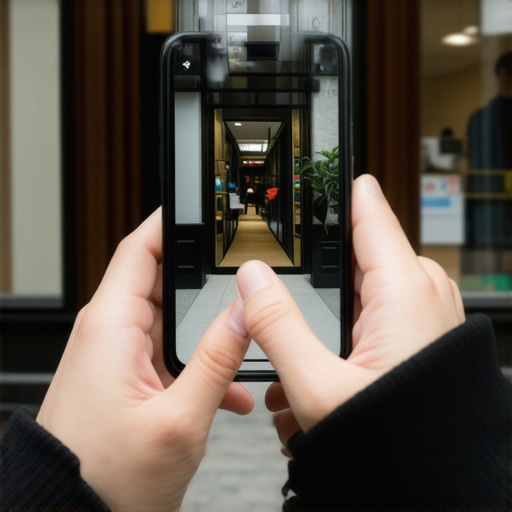
Recording a successful verification video requires a strategic sequence of shots that prove you have permanent, exclusive access to the location you claim. Start outside, standing on the sidewalk, and capture the surrounding environment including nearby landmarks or street signs to prove your street-level context. The camera must then follow you as you walk directly into the building, through the door, and into your specific workspace without any cuts or transitions. Once inside, you must show the tools of your trade, such as professional equipment, branded stationery, or a utility bill that matches the name and address on your profile. This is the only way to get verified without a postcard in many high-competition markets. If you are a service area business, you must show the branded vehicle and the tools inside the van while parked at the registered home office. Google is looking for “Information Gain” in these videos, searching for unique physical markers that cannot be faked by a spammer in a different country. For those who work from home, the process is even more invasive, requiring you to prove your business exists without a lease by showing the residential street and the specific office setup within the house. Any hesitation or blurring of the camera will result in a rejection. The system is designed to be difficult to deter the thousands of fake listings that attempt to flood the map pack daily.
The three mile radius that determines your revenue
Proximity remains the most dominant ranking factor in the local pack, creating a virtual wall that often prevents businesses from ranking more than three miles from their physical pin. While many agencies promise to help you rank city-wide, the mathematical weight of the user’s mobile device location usually overrides site authority or review count. This is why you see rankings that only work when you are in the parking lot, a phenomenon caused by a lack of prominence signals. To break this radius wall, you must build hyper-local authority through mentions in local news and geographically relevant link building. Utilizing a Google Maps ranking toolkit for local businesses can help you visualize this proximity heat map, but software cannot replace the hard work of building local trust. If you have recently changed ownership, you may need SEO services to restore map pack visibility because the algorithm treats a change in primary contact as a potential hijacking. This reset can kill your proximity reach overnight. You must also be wary of tracking your actual map rankings using tools that do not account for the specific GPS coordinates of the searcher. A green circle on a report does not mean the phone is ringing in the neighboring town.
“Distance is the ultimate filter. If the searcher is moving, the map pack must refresh its proximity weighting every fifty meters to ensure physical relevance.” – Location Intelligence Whitepaper
Recovering from ownership shifts and mass review removals
When a listing changes hands or suffers a mass review removal, the internal trust score of the profile drops to zero, requiring a total normalization of all digital signals. This often happens when a business attempts to normalize rankings after a keyword stuffed business name edit, which triggers a red flag in the spam filter. If you lose your reviews, you need SEO services to fix GMB rankings that focus on rebuilding authentic customer storytelling rather than buying robotic feedback. The GMB review and reputation management toolkit should be used to gather photos from customers taken at your location, as the metadata in these images provides 30 percent more ranking power for AI overviews than text alone. Furthermore, technical issues on your website can bleed into your map performance. Using SEO services to fix slow website issues is essential because Google correlates the mobile experience of your site with the reliability of your physical business. If your site is broken, the algorithm assumes your service is too. The final step in any recovery is a manual audit, because manual audits beat automated tools every single time when it comes to identifying the subtle errors in your category selection or your service area polygons. Do not trust a software dashboard to tell you why your business is invisible. Walk the street, look at the storefront, and make sure the digital pin matches the physical reality of the concrete under your feet.