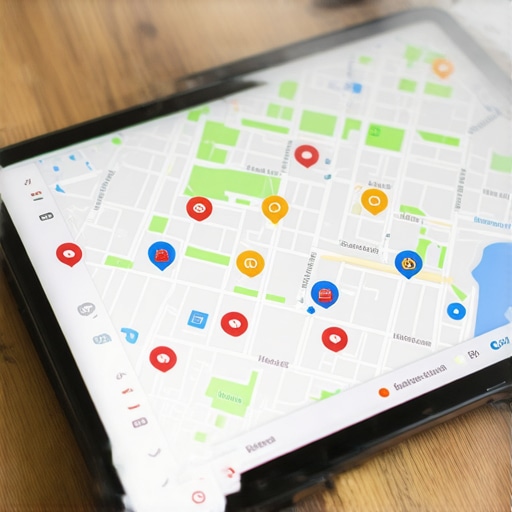
The hidden physics of the service area business
The air in the basement of that plumbing shop smelled like wet concrete and copper pipes. I spent three months fighting a hard suspension for this client whose listing was nuked simply because they shared a suite number with a defunct law firm. Google did not want proof of a van; they wanted proof of a utility bill under the exact GPS pin, a physical tether to a world they claimed they only served by truck. This is the reality of the hyper-local layer. You are not just a business. You are a proximity beacon in a spatial database that hates ambiguity. If you fail to anchor your digital presence to a verified geographic center, the algorithm treats you as a ghost. A service area business profile is the most difficult asset to maintain because it lacks the permanent storefront signal that Google trusts above all else. Success requires a forensic approach to data consistency and a deep understanding of how centroid theory dictates your revenue.
The microscopic math of service area polygons
Service Area Business (SAB) profiles require a defined geographic boundary consisting of specific zip codes or city names within a two hour driving radius of the home base. Google uses location signals from mobile devices and GPS coordinates to verify that your technicians actually operate within these defined zones. I have seen countless businesses fail because they tried to claim entire states. When you set your service area too wide, you trigger a proximity filter. You must understand why your service area business is getting filtered out by physical locations when competing against storefronts. The algorithm prioritizes the physical center. If your service area is a messy sprawl, you lose the prominence needed to win the 3-pack. You need to focus on tight, defensible zones where you have historical data of customer interactions.
Why your physical address is a liability
A physical business address for a home based business or private office acts as the primary verification anchor even when it is hidden from the public on Google Maps. Google uses this hidden data point to calculate your proximity score against competitor listings and user search locations. Many contractors make the mistake of using shared spaces. I have warned people repeatedly about the danger of using virtual offices for google maps because the AI detects the footprint of a Regus or WeWork immediately. When the system sees fifty businesses at one suite, it triggers a hard suspension. You have to learn how to prove your business exists when you work from home without exposing your family’s privacy. This involves submitting unedited video walk-throughs that show professional tools, branded vehicles, and utility bills that match your registration exactly. There is no room for error here.
“Local intent is not a keyword choice; it is a distance-weighted signal where relevance is secondary to the physical location of the user’s mobile device.” – Map Search Fundamental
The ghost in the GPS coordinates
GPS coordinate salience refers to the mathematical weight Google assigns to a service area business based on where its digital footprint is most active. Location intelligence relies on EXIF data from uploaded photos and check-in signals to confirm that a service provider is actually present at the service location. If you are sitting in a coffee shop in one town and trying to rank in another, the mismatch in signals will kill your visibility. This is why it is vital to know how specific image metadata helps your business show up for niche local searches. When your team takes a photo of a completed job, that photo contains a timestamp and a lat-long coordinate. When those coordinates match your claimed service area, Google begins to trust your reach. Without this proof, you are just another name in a database with no physical credibility. You are competing against the physics of the map itself.
Building a gmb ranking toolkit that actually works
A gmb ranking toolkit is a collection of analytical software and manual audit processes used to monitor map positions and detect profile issues before they cause a ranking drop. A true gmb audit and ranking toolkit must include grid tracking to visualize local proximity barriers and competitor analysis tools to identify spammy listings. Don’t be fooled by shiny dashboards. Many of the best local seo tools for google business profile are actually just interfaces for the Google API that miss the nuances of manual forensic work. You need to understand why manual audits beat automated tools for local optimization every time. Automated systems cannot see the reflection of a van in a storefront window or the subtle signs of a fake office. You should also evaluate gmb vs local listing tools comparison data to see which ones actually help you move the needle. A tool is only as good as the technician using it. If you rely on software to do the thinking, you will miss the patterns that lead to a suspension.
Surviving a gmb hard suspension for service area business
A gmb hard suspension occurs when Google removes a listing from search results due to a violation of terms or a failure of trust signals. To fix this, you need local seo services to fix gmb hard suspension for service area business that focus on manual appeals and document verification. The process is brutal. I have seen businesses lose 80 percent of their leads in a single afternoon because of a “suspicious activity” flag. You must understand how to win the appeal for a hard suspension on google by providing the exact documents they crave. This usually includes a business license, insurance documents, and a video showing your equipment. If you are dealing with a partial suspension with limited gmb features, you might still be able to edit your profile, but your rankings will be suppressed. In these cases, you need seo services to fix partial suspension issues by cleaning up your data across the web. The system is designed to flush out the fakes, so you must prove you are real beyond any doubt.
Local Authority Reading List
- The 5 essential items for your map ranking toolkit
- The documents needed for a successful manual review
- How to fix the invisible signal keeping you out of the local map pack
- The 3 documents google actually accepts for location proof
- How to get google to trust your business address again
The three mile radius that determines your revenue
The three mile radius is the primary engagement zone where a service area profile has the highest probability of appearing in the Local Pack. As a user moves further from your verified address, your ranking strength decays exponentially based on the density of competitors. This is the wall that most businesses hit. You can try to learn how to break the five mile proximity barrier without opening new offices, but it requires incredible topical authority. Google looks at your website’s content to see if you mention specific neighborhoods, landmarks, and local events. If your site is just a generic template, you will never rank in the next town over. Proximity is a physical constraint, but relevance is a digital one. You have to balance both to maintain a steady flow of leads.
Cleaning up the digital mess of spammy backlinks
Spammy backlinks and toxic link profiles can trigger algorithmic penalties that prevent a local business profile from ranking in the map pack. You need services to clean up spammy backlinks that focus on disavowing low quality domains and restoring link equity to your location pages. I have seen companies buy thousands of directory links thinking it would help. It didn’t. Most of the time, why buying local citations often does more harm than good becomes apparent when your rank drops after an update. You should also watch out for over optimized anchor text. If every link to your site says “Plumber New York City,” Google’s spam filter will flag you. You need services to fix over optimized anchor text by diversifying your link profile with branded and natural terms. A clean backlink profile is the foundation of a stable rank.
“A service area business must define its reach not by where it wants to go, but by where it can prove it has already been through historical location data.” – SAB Verification Protocol
Fixing the invisible signal keeping you out of the local map pack
An invisible signal such as hidden metadata or conflicting NAP data can prevent a verified business from appearing in local search results. You must audit your business profile for ghost hours, mismatched phone numbers, and incorrect category selections that confuse the ranking algorithm. Sometimes the problem is your website. If your site is crawling, you need seo services to fix slow website and technical issues immediately. Google will not reward a profile that sends users to a broken page. Check the link between website speed and local map placement to understand the correlation. Every millisecond counts. If your competitors have a faster site and a cleaner profile, they will take the lead every time, regardless of how many reviews you have.
The forensic trace of a service area worker
The behavioral signals of your service technicians such as mobile app usage and customer review locations create a forensic trace that Google uses to verify your service area. When a customer leaves a review and mentions their specific neighborhood, it provides a proximity signal that no citation package can replicate. This is why you should stop chasing review volume and use this storytelling prompt instead. A review that tells a story about a specific street or landmark is worth ten generic 5-star ratings. Google’s AI reads these reviews to understand your real-world reach. If you claim to serve a city but all your reviews come from twenty miles away, the algorithm will adjust your visibility accordingly. You cannot fake local presence in the age of behavioral tracking. You have to be where you say you are.
Monitoring and preventing future gmb suspensions
Monitoring services provide real time alerts for unauthorized edits or profile flags to prevent future gmb suspensions and maintain map visibility. A proactive defense strategy includes auditing your business name for local seo safety and securing your account against competitor sabotage. You need to know how to audit your business name for local seo safety to ensure you aren’t accidentally violating terms with keyword stuffing. Many agencies use risky tactics that work for a week and then get your listing killed. I have seen the aftermath. It is much harder to fix a suspension than it is to prevent one. Use services to monitor and prevent future gmb suspensions to keep a constant eye on your data. The map is a battlefield, and the rules change without notice. If you aren’t watching your profile every day, you are leaving your revenue to chance.