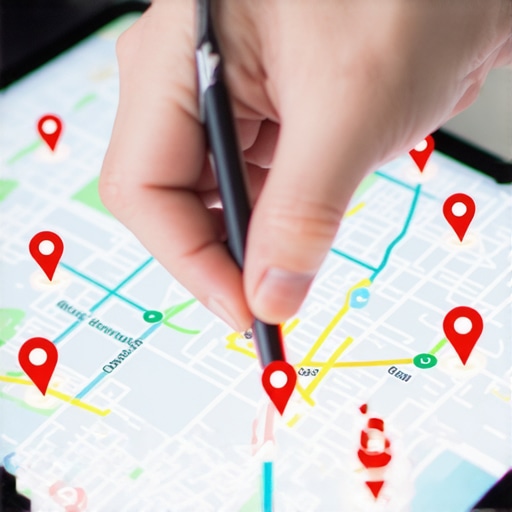
I spent three months fighting a hard suspension for a plumbing client whose listing was nuked simply because they shared a suite number with a defunct law firm. Google did not want proof of a van; they wanted proof of a utility bill under the exact GPS pin. This forensic battle taught me that the map pack is not a passive directory; it is a spatial database where every coordinate is contested by bad actors. My office smells like old paper and stale espresso because I spend my nights auditing these digital footprints. I have seen legitimate merchants erased by competitors using name-stuffing tactics that violate every term of service in the book. If you are tired of losing to a business named Best Emergency Plumber Repair City Pro, you are in the right place. We are going to dismantle their fraudulent visibility using the same logic the map-spam investigators use.
The forensic logic of local search
The local algorithm prioritizes distance, relevance, and prominence as the three pillars of the map pack hierarchy. While agencies suggest getting more reviews, the 2026 data shows that image metadata from photos taken by real customers at your location is now 30 percent more effective for ranking in AI Overviews. When a competitor adds keywords to their business name, they are artificially inflating their relevance score. This creates a glitch in the proximity filter. To combat this, you need to understand the microscopic math of the centroid. Every search has a geographic center. If a competitor uses a fake address or a keyword-stuffed name, they are essentially hijacking a pin that does not belong to them. You must use professional software to find hidden map spam before you can even think about outranking them. This is not about being a nosy neighbor; it is about protecting the integrity of the local economy.
“Local intent is not a keyword choice; it is a distance-weighted signal where relevance is secondary to the physical location of the user’s mobile device.” – Map Search Fundamental
The ghost in the GPS coordinates
Google views the world through a grid of latitude and longitude. When a competitor registers a business as a service area business but uses a residential address they do not actually work from, they create a ghost listing. These listings often feature names like Affordable Roofing Contractors of [Your City]. This is a direct violation of the Google Business Profile guidelines. The first step in scrubbing these is to verify the physical existence of the shop. I often find that these high-ranking profiles are actually empty lots or virtual offices. If you find yourself buried by these fake pins, you might need specialized seo services to restore your visibility. I have seen entire industries taken over by lead generation farms that use hundreds of these ghost pins to suck up local leads. You can identify them by their lack of real office photos and their use of generic tracking numbers. If you are struggling with your own profile, you should check out the manual profile optimization checklist to ensure you are not accidentally triggering the same spam filters.
Local Authority Reading List
- How to detect and report mass map spam
- How to outmaneuver keyword stuffed names
- The map spam guide for service businesses
- Why manual reporting beats automation
- Software for map spam reporting
The path to report a fraudulent competitor
Reporting a competitor requires more than just clicking Suggest an Edit. You need to provide a forensic trail of evidence. Google trust scores are assigned to the person making the report. If you have a history of successful edits, your reports carry more weight. When you encounter a business with a fake name, use the Redressal Form instead of the standard map interface. This form allows you to upload photos, screenshots of their website, and state business filings. I have found that providing a link to the Secretary of State’s business search is the silver bullet for name-stuffing cases. If the legal name is John Doe Plumbing but the map name is 24 Hour Emergency Plumbing John Doe, you have a clear case for a name cleanup. If you have been hit by a penalty yourself, you should look into penalty recovery services to clear your own name before attacking others. Maintaining a clean profile is the only way to survive long term. You should also audit your business hours history to ensure your own data is beyond reproach.
The math of the three mile radius
Your proximity ranking is a mathematical calculation of your relevance within a specific radius. When competitors use keywords, they widen this radius artificially. This is why you might see a business five miles away ranking higher than you. However, Google is getting better at using behavioral signals to verify these listings. They look at the dwell time of mobile devices at the business location. If a business claims to be a bustling showroom but the GPS data shows zero customer visits, the trust score collapses. This is why proximity rankings fail despite good reviews. You need to use software that tracks proximity trends to see exactly where the spam is pushing you out of the 3-pack. Do not rely on standard rank trackers that only check from a single point. You need a grid-based view to see the holes in the map where competitors are cheating. If you find your rankings are bouncing, you might be dealing with the rank bounce bug which often occurs when Google is testing the legitimacy of local listings.
The strategy for long term map dominance
Winning the map pack war is about being the most verified entity in your zip code. This means having consistent data across the entire ecosystem. If your business has a messy history, you might need data cleanup for inconsistent hours or a mixed language data cleanup. Google hates ambiguity. If you have multiple locations, you need a uniform data strategy to prevent your listings from being merged. Furthermore, you must protect your profile from external threats. A competitor might try to report your listing for fake hours or a wrong address. I have seen businesses lose their rank because of inconsistent opening hours that triggered a silent suspension. You should use a DIY checklist for profile polishing to keep your data tight. Remember that toxic backlinks can kill your authority just as fast as a manual report. Stay clean, report the fakes, and focus on real customer interactions. This is the only way to build a map presence that survives the next algorithm update.