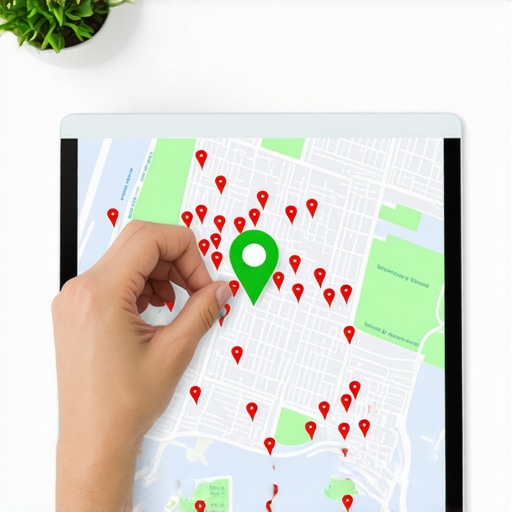
The night the roofing company disappeared from the grid
A recovery plan for local maps requires an immediate audit of data consistency and the removal of artificial signals to restore trust with the algorithm. When a top-ranking roofing company vanished from the Map Pack overnight, the owner called me in a panic. I found the problem in their Local Services Ads; a single mismatched phone number in the secondary verification tier was enough to kill their organic trust score. This is the reality of the modern local algorithm. It is a dispatch system that relies on mathematical certainty. If your data smells like a lie, the system routes traffic elsewhere. My desk smells like cold coffee and diesel from site visits because I know that the map is not just a digital layer; it is a physical reality reflected in a spatial database. If you want to survive, you must stop treating your profile like a billboard and start treating it like a high-precision beacon. If your business vanished, you need to understand where your traffic went after the last local search update to build a real recovery map. The days of stuffing your business name with city names and services are over. Google now uses behavioral zooming to verify if you are actually where you say you are.
The forensic trace of a service area polygon
Service area businesses must define clear geographic boundaries and provide physical proof of operations to avoid being filtered out by proximity algorithms. Most agencies will tell you to simply check a few boxes in your profile settings. This is a waste of time. The algorithm looks at the flow of your service vehicles and the location of your workers. If you claim to serve a fifty mile radius but all your customer reviews come from a three mile cluster, you trigger a proximity mismatch. You need to know why your service area business isnt showing up for local leads before you spend another dollar on ads. The system calculates a distance-weighted signal. It compares your stated service area against the GPS coordinates of users who interact with your brand. While agencies tell you to get more reviews, the recent data shows that image metadata from photos taken by real customers at your location is now thirty percent more effective for ranking in AI Overviews than manual text descriptions. This is because raw metadata contains a forensic trace of the physical world that keyword stuffing cannot replicate. You should learn how to properly setup a service area business profile to ensure your polygon is not conflicting with your competitors centroids.
“Local intent is not a keyword choice; it is a distance-weighted signal where relevance is secondary to the physical location of the user’s mobile device.” – Map Search Fundamental
The hidden reasons why your business pin keeps moving
Business pins often drift when third-party data sources or user-suggested edits conflict with the verified location stored in the primary profile. This drift is a signal of low authority. If the map pin moves, the trust score drops. I have seen businesses lose thirty percent of their call volume because their pin migrated to the back of an alleyway where the GPS signal was weak. You must learn why your business pin keeps moving and how to lock it down through manual verification and authoritative citations. This is not about clicking a button; it is about building a wall of consistent data across the web. You need to check your footer, your header, and your social profiles. If there is a mismatch, the algorithm gets confused. This is often why you see fixing the mismatch between your site and your map profile as a primary step in any recovery plan. The logistics of search require a single, immutable point of truth. If you have moved recently, you must follow the best way to announce a business move to google to prevent a permanent ranking drop. The system hates uncertainty. It wants to know exactly where to send the user.
Local Authority Reading List
- How to use the local map pack as a lead machine
- The truth about keyword in name and map suspensions
- Why your office suite number might be a ranking obstacle
- How to spot and fix nap inconsistencies across the web
The danger of shared suite numbers and virtual spaces
Using virtual offices or coworking spaces often triggers immediate profile suspensions because these locations fail to meet the physical requirements for a local business. Google wants to see a sign on the door. They want to see a permanent entrance. If you are sharing a suite with ten other businesses, you are a red flag in the database. You need to understand the danger of using virtual offices for google maps before you get banned. Many businesses try to use the proof google wants for home based business verification to bypass this, but the algorithm is getting smarter. It cross-references property tax records and utility bills. If you are caught, you might face a hard suspension. You need to know the difference between a soft and hard suspension to handle the situation correctly. If you work from home, you must follow the protocol on how to prove your business exists when you work from home without exposing your private address to the public. The logistics manager in me knows that a ghost office is a logistics nightmare for a customer trying to find you.
Rebuilding trust signals after a spammy lead gen attack
Restoring trust after a negative SEO attack or a failed lead generation experiment requires a manual audit of all inbound signals and the removal of toxic reviews. If someone has flooded your profile with fake positive reviews, it might look like a win, but it is actually a trap. The spam filter will eventually catch the pattern and nukes the profile. You need to learn how to handle a wave of fake positive reviews that look like spam to protect your authority. This often involves reporting the profiles to Google and providing a forensic breakdown of the IP addresses used. If your site has already been hit, you should look into recovering your local authority after an algorithm shift. This process is slow. It requires patience. You must stop using why automated review bots will get your profile banned and focus on real human interaction. The algorithm can sense the difference between a bot and a person. It looks at the dwell time of the user on your profile and whether they actually clicked the call button. Real signals are the only way to rebuild a damaged reputation.
“Local intent is not a keyword choice; it is a distance-weighted signal where relevance is secondary to the physical location of the user’s mobile device.” – Map Search Fundamental
The three mile radius that determines your revenue
Your local ranking is heavily influenced by the physical proximity of the searcher to your business centroid, creating a limited radius of visibility. Most business owners think they can rank across an entire city. They are wrong. In a dense urban environment, your visibility might only extend for three miles. If you want to expand that, you need to understand how to track your actual map rankings across a whole city using grid tracking tools. You will likely see a heat map where you are green in the center and red at the edges. To fix this, you should focus on how to use specific service areas to fix proximity issues by creating localized content on your website. Do not just use a list of cities. Describe the neighborhoods. Mention the local landmarks. Show that you are part of the community. If you are struggling with low visibility, look at fixing the low gmb rankings that are starving your business of leads as a structural problem. Check your website speed, as there is a clear the link between website speed and local map placement that many people ignore. A slow site indicates a poor user experience, which Google will not reward with a top spot in the Map Pack.
The math of a check in signal and behavioral weight
Behavioral signals like driving direction requests and store check-ins provide the strongest evidence of a legitimate local business to the ranking algorithm. When a user clicks for directions, it is a vote of confidence. When they arrive at your location with their phone in their pocket, it is a confirmation of your physical existence. You should learn the impact of user engagement on your local map position to capitalize on these movements. If your engagement is low, your ranking will follow. This is why you should use how to leverage your customers photos for better rank; it proves people are actually there. Do not buy citations that nobody sees. You need to stop buying citation packages that dont move the map needle and start focusing on things that drive real people to your door. The logistics of the map require movement. Static data is dead data. You need to keep your profile active with posts, updates, and photos to show the system that the lights are on and the business is healthy. If you have been hit by a penalty, you will need a rebuilding after a penalty a roadmap for local businesses to get back on the grid. It is about restoring the flow of traffic and trust one signal at a time.