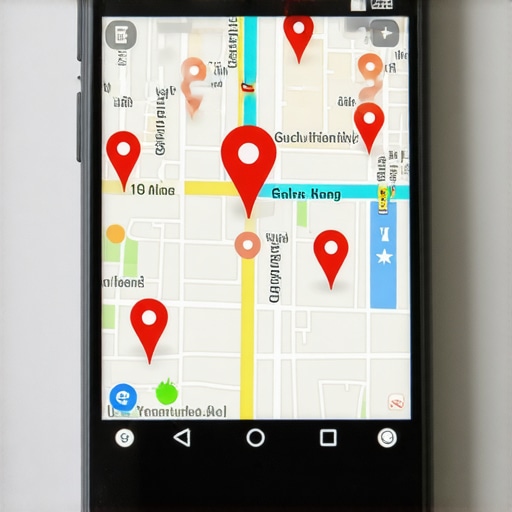
The smell of wet concrete after a summer storm always reminds me of the day I watched a multimillion dollar plumbing empire vanish from Google Maps in less than ten seconds. It was a glitch in the storefront data, a microscopic misalignment between their registered GPS coordinates and the actual centroid of the city. They were physically there, but mathematically they had ceased to exist. Most business owners think the Map Pack is a popularity contest. It is not. It is a spatial database governed by the physics of proximity and the forensic trace of behavioral signals. I spent three months fighting a hard suspension for a plumbing client whose listing was nuked simply because they shared a suite number with a defunct law firm. Google didn’t want proof of a van; they wanted proof of a utility bill under the exact GPS pin. That experience taught me that the map is not the territory; the map is a rigid set of rules that punish even the slightest deviation from physical reality. Your absence from the local results is rarely an accident. It is usually a penalty for a signal you did not even know you were broadcasting.
The ghost in the GPS coordinates
Every mobile device acts as a proximity probe. When a user triggers a near me search, Google calculates a three mile radius shift that can render your high authority website completely invisible if your beacon is weak. You might have thousands of reviews, but if your physical location lacks the environmental signals of a real business, you will lose to a competitor with ten reviews located five hundred feet closer to the user. This is where a gmb keyword and category research toolkit becomes vital for survival. You cannot guess your way into the 3-pack. You have to map the competition using local seo software to improve map pack rankings that actually reflects real world distance weighting. If your pin is located in a high density area where multiple businesses share a building, you are likely suffering from centroid suppression. This happens when Google filter logic decides that only one business per category can occupy a specific spatial coordinate. If you are not the primary occupant in the eyes of the algorithm, you are a ghost. You need seo audit and penalty recovery services to identify if your listing is being filtered out due to these hidden proximity overlaps. This isn’t about keywords; it is about the geometry of the search.
“Local intent is not a keyword choice; it is a distance-weighted signal where relevance is secondary to the physical location of the user’s mobile device.” – Map Search Fundamental
The three mile radius that determines your revenue
Distance is a brutal filter. In the old days, you could rank across an entire county with a few citations and some decent backlinks. Now, the Vicinity update has tightened the leash. If your service area polygon is poorly defined, you are wasting your signal. I have seen businesses lose 40 percent of their traffic because they changed their Saturday hours by thirty minutes. This is why why your profile vanished after changing your saturday hours slightly is a common cry for help among service providers. The algorithm views stability as trust. When you fluctuate your data, you flicker on the map. To combat this, you need a gmb keyword and category research toolkit that monitors how your rank drops as you move away from the city center. Many agencies use static trackers that provide a false sense of security. You must use the map tracking tools that give the most accurate local data for 2026 to see the true fragmentation of your reach. If you see a grid where you are green at the office but red two blocks away, you have a proximity authority problem that no amount of link building can fix without a local signal overhaul.
Local Authority Reading List
- The only local seo checklist you need to stay in the 3-pack
- How to find map trackers that show the real 3-pack for your area
- Why toxic backlinks are the silent killer of local profile authority
- The software that finds hidden map spam in your service area
- How to fix the 404 errors dragging down your local profile rank
The forensic trace of mass review removals
Nothing kills a local reputation faster than a sudden sweep of your best customer feedback. Google has become increasingly aggressive with its spam detection filters. If you have recently hired seo services to fix gmb rankings after mass review removal, you know the frustration of seeing years of social proof vanish overnight. This usually happens because the behavioral patterns of the reviewers did not match the expected local footprint. If a customer leaves a review but their phone GPS shows they were never at your shop, that review is a liability. We often provide recovering your reputation after a mass removal of genuine reviews by auditing the user profiles and submitting manual appeals to the spam team. You cannot rely on automated fixes for this. You need a human who understands the logic of review sentiment and IP geofencing. If you are struggling, look into how to rebuild your map rankings after losing your best reviews through legitimate, high friction customer engagement. High friction means the customer actually has to spend time at your location for the review to stick.
Why your physical address is a liability
Many businesses are moving toward service area profiles to avoid the costs of a physical storefront. However, this creates a massive trust gap in the eyes of the algorithm. If you are a service based business, you need the map spam fighting guide for service area based businesses to prevent competitors from reporting your listing as fake. The map is filled with lead generation pins that don’t exist. If you look like one of them, you will be purged. I have helped clients using local seo services to fix banned gmb listing issues that stemmed entirely from an inconsistent address history. If your home address is still linked to an old corporation record, Google will find it. You must ensure that your NAP data is surgically clean across the web. This is why the specific address tweak that ends local ranking confusion is often the first step in any professional recovery plan. Without a verified, stable physical anchor, your digital presence is built on sand.
“A business profile is a beacon in a spatial database where every inconsistent byte of data acts as interference to your proximity signal.” – Location Intelligence Whitepaper
Dealing with brand confusion and merged listings
Sometimes the problem isn’t that you are missing; it is that you have been merged with a competitor or an old version of yourself. This is common during ownership changes. You need seo services to restore map pack visibility after listing ownership change to untangle the mess of old phone numbers and legacy emails. If Google sees two businesses with similar names at the same location, it will often merge them into a single, confusing profile. We provide seo services to fix brand confusion from merged gmb listings by force feeding the algorithm new, distinct data points through local press releases and updated schema. You should also check why your local profile rank is tied to your sites 404 error count. If your website is broken, your map listing will suffer because Google views the site as the primary source of truth for the business. Fixing technical debt is often the fastest way to see a jump in the 3-pack.
The ultimate toolkit for agency survival
If you are managing multiple clients, you cannot rely on the basic dashboard. You need google business profile seo tools for agencies that allow for bulk monitoring and spam detection. I recommend using best software to rank in google maps 3 pack that provides heat maps of your rankings. A single point rank check is useless. You need to see how you perform across a ten mile grid. If you are an agency owner, you should be looking for the anatomy of a high performance gmb optimization toolkit to streamline your workflow. This includes services to monitor and prevent future gmb suspensions by alerting you the moment a competitor suggests an edit to your clients profile. Vigilance is the only way to maintain a top position in a competitive niche.