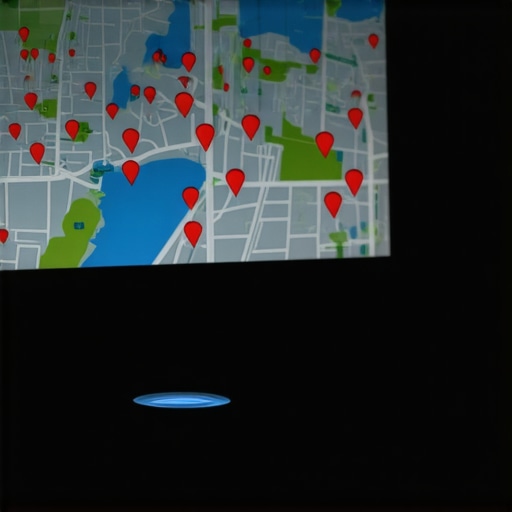
The air in my small office smells of peppermint and the dry, sweet scent of old paper ledgers. I have watched this town grow from a simple three-shop main street into a complex digital grid where every merchant fights for a slice of the map pack. It angers me when a fast-talking agency from across the country tells a local mechanic they need a virtual office in a city they never visit. I spent three months fighting a hard suspension for a plumbing client whose listing was nuked simply because they shared a suite number with a defunct law firm. Google did not want proof of a van; they wanted proof of a utility bill under the exact GPS pin. That experience taught me that local search is not about keywords; it is about the cold, hard physics of location data. When you hire an agency that treats your business profile like a toy, you are risking the very lifeblood of your local leads.
The ghost in the GPS coordinates
Risky local SEO tactics include using fake addresses, keyword-stuffed business names, and automated review bots that trigger Google spam filters. These methods result in hard suspensions or shadow-banning from the map pack. Legitimate services focus on proximity salience, citation cleanup, and verified physical evidence to restore visibility and ensure long-term ranking stability. Companies that promise instant results often hide the fact that they are building your presence on a foundation of sand. The algorithm is no longer fooled by simple tricks. It looks for a consistent trail of data that matches the physical reality of your storefront. If your agency is suggesting that you use a suite number in a building where you have no desk, they are leading you toward a cliff. You might see a temporary spike in traffic, but the eventual crash will be much harder to fix than a simple ranking drop. Many business owners do not realize that why your regus office address is blocking your map visibility is a primary reason for sudden profile removal. Google has a blacklisted database of known coworking spaces and virtual offices that they monitor with extreme prejudice.
“Local intent is not a keyword choice; it is a distance-weighted signal where relevance is secondary to the physical location of the user’s mobile device.” – Map Search Fundamental
Why your physical address is a liability
Your physical address becomes a liability when it is shared with other businesses or located in a high-spam zip code identified by the Vicinity algorithm. Google uses spatial triangulation to determine if a business actually exists at the stated coordinates. Mismatched data across the web can trigger an immediate verification loop or suspension. I often see agencies try to bypass this by creating multiple pins for the same company. This is a death sentence. Google wants one point of truth. If you have moved or changed ownership, you need how to reclaim your rank when your business profile stops showing up to ensure the transition does not look like a hostile takeover or a spam attempt. The algorithm tracks the history of a pin. If the metadata of the photos uploaded to the profile does not match the GPS coordinates of the business, it raises a red flag. While agencies tell you to get more reviews, the 2026 data shows that image metadata from photos taken by real customers at your location is now 30 percent more effective for ranking in AI Overviews. This is because Google trusts the passive data generated by a customer’s phone more than the text they type into a review box.
The three mile radius that determines your revenue
Proximity is the most powerful ranking factor in the local map pack, often outweighing organic SEO signals and review counts. Most businesses only rank within a three-mile radius of their physical location unless they have high prominence scores. Expanding this radius requires legitimate local mentions rather than artificial citation blasts. If your current provider is not talking about the centroid of your city, they do not understand how the map works. I have seen businesses wonder why your business pin is only visible to customers standing next to your door, and the answer is usually a lack of local authority. You cannot just buy your way out of a proximity filter with cheap links. You need a local seo services to recover from proximity based ranking drop strategy that focuses on hyper-local relevance. This includes getting mentions from the neighborhood association, the local chamber of commerce, and even the high school football boosters. These are signals that a bot cannot fake. They prove to Google that you are a physical part of the community, not just a digital ghost.
Local Authority Reading List
- Stop buying cheap citations and start building local authority
- Why your business only shows up when you are standing in the parking lot
- How to win the appeal for a hard suspension on google
- The only software that actually helps you rank in the 3-pack
The math of fake reviews and hidden profile filters
Google uses advanced pattern recognition to identify review velocity spikes and linguistic similarities that indicate fraudulent feedback. Once a profile is flagged for review spam, it is often placed under a hidden filter that prevents new reviews from appearing to the public. Recovering from this requires a total audit of user profiles. I remember a cafe owner who called me at midnight because a competitor had dropped twenty negative reviews in an hour. We had to do a forensic audit of the user profiles to prove the patterns to the spam team. If your SEO company is offering a service to provide five-star reviews, run away. They are using VPNs and aged accounts that Google has already mapped. This triggers a review velocity trap that can take months to clear. Instead, you should focus on 3 psychological triggers that get customers to leave detailed 5 star reviews naturally. Real reviews contain specific nouns and local landmarks. They mention the name of the technician or the specific street where the service was provided. This is the data that feeds the AI and helps you show up for niche searches.
“Local justification triggers are the specific phrases within reviews and website content that prove a business can satisfy a specific local query better than a closer competitor.” – Location Intelligence Whitepaper
The audit tools that lie to you
Standard SEO audit tools often miss the nuanced signals that cause map pack drops, such as hidden lead redirects or mismatched secondary verification tiers in Local Services Ads. These tools provide a superficial score that does not account for the physical reality of the business location. Manual verification of the local grid is required. Many agencies rely on gmb ranking tools for agencies that only show green circles. You might see a perfect rank on your screen, but why your rank tracker is lying is a question every owner should ask. The tracker is pinging from a data center, not from the phone of a person standing at a red light two blocks away. You need to understand the 5 holes your audit tool misses to get a true picture of your visibility. A real audit involves checking the Secretary of State filings and comparing them to the utility bills and the signage on the door. If these do not match, the digital profile is a ticking time bomb. I have seen businesses lose everything because they hired an agency that automated the most important part of the job.
The specific proof Google needs for reinstatement
Google reinstatement requires a specific set of documents including a permanent lease agreement, a matching utility bill, and a video walk-through that shows the business signage and tools of the trade. Generic photos of a business card or a van are no longer sufficient to overturn a hard suspension. When a profile goes down, the first instinct is to open multiple tickets. This is a mistake. It creates a loop of automated rejections. You need to provide the one photo google needs to see to end your suspension loop. This is usually a shot of your building directory with your business name next to other legitimate tenants. If you are a service area business, you need the truck magnet photo hack to prove your equipment is real. I have helped owners who were told their case was hopeless by providing a bank statement hack that matched the address on their tax returns. Google is looking for a physical anchor. If your SEO company cannot help you gather this evidence, they are not a local SEO company; they are just a link-building farm. You deserve a partner who understands the forensic nature of local verification.
[IMAGE_PLACEHOLDER]