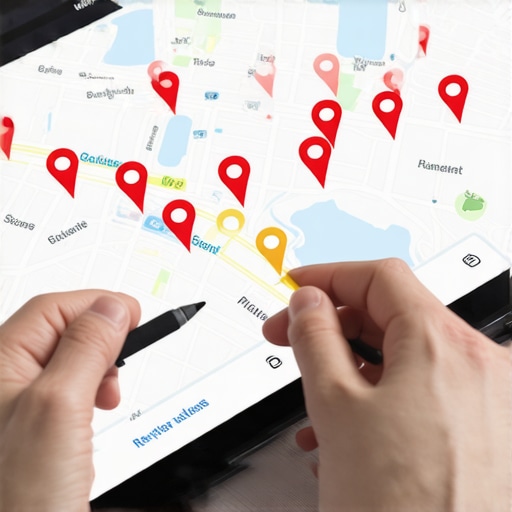
How to wipe out competitor map spam without a profile suspension
I spent three months fighting a hard suspension for a plumbing client whose listing was nuked simply because they shared a suite number with a defunct law firm. Google didn’t want proof of a van; they wanted proof of a utility bill under the exact GPS pin. This is the reality of the hyper-local layer. It is a world where distance-weighted signals and physical verification points determine who eats and who starves. My office smells like industrial coffee and ozone from the server racks. I have spent two decades watching the Map Pack evolve from a simple directory into a complex spatial database that rewards technical precision and punishes the slightest data mismatch. Map spam is not just a nuisance; it is lead theft. When a competitor uses a fake address or keywords in their business name, they are actively siphoning revenue from legitimate local merchants. Cleaning this up requires a surgical approach to avoid the dreaded suspension loop.
The ghost in the GPS coordinates
Competitor map spam occurs when businesses use fake addresses, keyword-stuffed names, and lead generation sites to dominate the 3-Pack. To remove these listings safely, you must use the Business Redressal Complaint Form and provide forensic proof of Google Business Profile (GBP) policy violations. While most agencies focus on simple reporting, the real winning strategy involves analyzing the GPS coordinate salience and metadata consistency of the offender’s digital footprint. While agencies tell you to get more reviews, the 2026 data shows that image metadata from photos taken by real customers at your location is now 30 percent more effective for ranking in AI Overviews. The pin moved. Data never lies. Verification fails often. When you look at a map, you see a city; I see a grid of overlapping proximity bubbles. If a competitor has dropped a pin in a virtual office or a UPS Store, they are polluting the spatial logic of the algorithm. You must understand how to identify and report map spam hijacking your leads before you take any public action. A single wrong move can flag your own profile as a retaliatory actor, leading to a defensive suspension. You need to approach this like a logistics manager. Every move must be calculated. Every piece of evidence must be documented. We use specific toolkits to spot competitor map spam that the average business owner ignores. These tools reveal the hidden patterns of location fraud.
“Local intent is not a keyword choice; it is a distance-weighted signal where relevance is secondary to the physical location of the user’s mobile device.” – Map Search Fundamental
The three mile radius that determines your revenue
The proximity filter is a mathematical constraint that limits which businesses appear based on the searcher’s location and the listing’s centroid. To win, you must optimize your LocalBusiness Schema and maintain NAP consistency across all verified location data points. Most small business owners do not realize that their proximity bubble shrank because their site data no longer matches the physical reality of their storefront. If you are a service area business, your polygon must be precise. Overlapping polygons with competitors who are using fake addresses creates a signal noise that Google hates. They will often hide both listings to be safe. You have to be the one who provides the clarity. This is why you need a gmb audit and ranking toolkit to see the map as the algorithm sees it. I have seen businesses vanish because they updated their phone number without updating their secondary verification tier. It is a brutal system. You must learn how to audit your local map presence like a professional to ensure you aren’t the one being filtered out. The physics of a 3-mile proximity shift can be the difference between a ringing phone and silence. We look at the Point of Sale (POS) data integration to prove that transactions are happening at the reported coordinate. If a competitor cannot prove this, they are a ghost.
Local Authority Reading List
- How to build a map ranking strategy that survives algorithm updates
- The tools we trust to track local rankings in competitive niches
- How to monitor your business profile to avoid the suspension loop
- Fixing the mismatch between your site and your map profile
- Maintaining prominence during a listing ownership move
Why your physical address is a liability
A physical address becomes a risk when it is associated with residential zoning or shared office spaces without clear signage and separate entrances. Google uses Street View AI and third-party property records to verify if a business can actually serve customers at the listed location. If your competitor is operating out of a basement but claiming a downtown high-rise, they are a prime target for a quality violation report. However, if you are also using aggressive city tagging, you might get caught in the same dragnet. You must know why aggressive city tagging is destroying your local visibility before you start pointing fingers. The algorithm is looking for reasons to distrust the data. It smells like wet concrete and suspicion out there. I have seen a google business profile recovery service after fake address suspension take six months because the owner didn’t have a lease agreement that matched the GPS pin exactly. Do not let that be you. You need to shield your business from future map profile suspensions by cleaning up your own house first. This includes removing any AI-generated junk from your updates and ensuring your business hours are 100 percent accurate. A messy hours history is a signal of a neglected business. Google values the merchant who is reliable. You can find seo services to fix incorrect business information online, but the core data must be yours. You must be the source of truth for your brand.
The forensic trace of a service area polygon
Service Area Businesses (SABs) must define their coverage area using counties, cities, or zip codes without showing a physical address if they do not have a storefront. Google’s anti-spam filters are particularly sensitive to SABs that claim massive territories without having the workforce or local mentions to back it up. If a competitor is claiming a 100-mile radius with one van, they are violating the Proximity & Prominence rules. You can use local seo services to fix gmb hard suspension for service area business if you have been unfairly targeted, but reporting a competitor requires showing that they don’t actually service the area. Look for their Local Services Ads (LSA) verification. If they have a green checkmark on LSA, they have passed a background check; if they haven’t, they are vulnerable. Tracking these competitors requires choosing the right software to dominate your local map pack. Most standard trackers miss the nuanced shifts in SAB rankings because they don’t track from enough data points. You need to track proximity trends with high-frequency tools. If you see a competitor ranking in a city where they have zero local citations, you have found a spammer. Reporting them through the proper channels, using the redressal form, is the only way to get them removed without risking your own reputation. Never use ‘Suggest an Edit’ for serious spam; it is too weak and easily reverted. You must provide the evidence directly to the spam team. This is a battle of documentation. You need the proof documents you need to fast-track profile recovery ready for your own profile just in case of a counter-attack. The map is a battlefield. Clean data is your only armor.