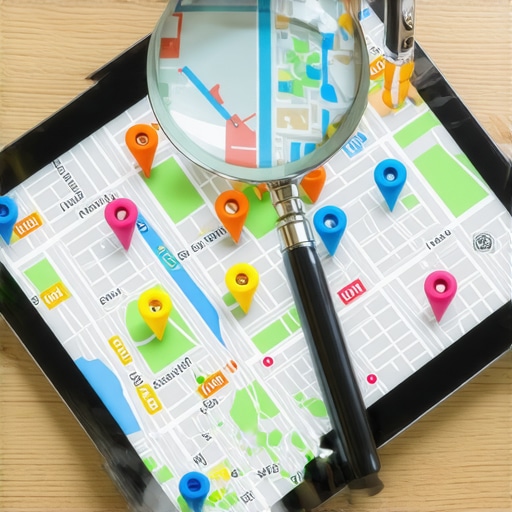
The air smells like wet concrete and ozone as I stare at the neon sign of a cafe in the city center. This isn’t just about coffee; it is about a digital footprint that is currently being erased by a malicious actor. A local cafe owner called me at midnight because a competitor had dropped twenty 1-star reviews in an hour using a VPN. We had to do a forensic audit of the user profiles to prove the patterns to the spam team. This is the reality of the map pack; it is a battleground where data points are weapons and proximity is the ultimate filter. To understand your position, you must stop looking at your business as a store and start seeing it as a beacon in a spatial database. Every review, every photo, and every GPS check-in is a signal that Google interprets to decide if you exist in the physical world or if you are a ghost in the machine.
Audit your presence by looking for the glitches in your storefront data before the algorithm finds them first. Professionals don’t guess about their visibility; they use a google business profile toolkit to measure the proximity based ranking drop and identify duplicate content issues. By examining gmb categories and local search signals, you can uncover why your map pack position fluctuates or why you suffer from a soft 404 error on your location pages.
The night a cafe owner called about review extortion
Reputation management and review repair services are often the first line of defense when a local business faces a coordinated attack. In the case of the cafe owner, the attacker used fresh accounts with no local history, which is a classic signature of a review farm. We documented the user engagement patterns and cross-referenced them with known map spam signatures to force a manual review. You must know how to handle high-volume review spikes without being flagged so that your legitimate defense doesn’t look like a second wave of manipulation. Forensic auditing requires you to look beyond the star rating and investigate the metadata of the profiles leaving those reviews. If twenty people from three different continents suddenly hate your local bagel shop at 3 AM, the google business profile ranking software will eventually notice the anomaly, but your revenue will tank before the automated filter kicks in.
The ghost in the GPS coordinates
Local seo services often fail because they treat GPS coordinates as static text rather than dynamic trust signals. Google does not just look at your address; it looks at the centroid of your service area and the physical location of the mobile devices that interact with your profile. If your business profile claims to be in a high-traffic zone but no phones ever pause at that location, you are a ghost to the algorithm.
“Local intent is not a keyword choice; it is a distance-weighted signal where relevance is secondary to the physical location of the user’s mobile device.” – Map Search Fundamental
This distance-weighted logic means that even if you have the best website in the city, a competitor who is two blocks closer to the searcher will win the map pack nearly every time. You can try using verified location data to outrank local competitors, but you must first ensure that your NAP consistency is not being undermined by a suite number that doesn’t exist in the postal database. The mathematical weight of a local review sentiment is tied to the geographic relevance of the reviewer. A review from a local guide who frequently visits your neighborhood carries three times the weight of a review from a traveler passing through.
Why your physical address is a liability
Google business profile seo tools for agencies frequently flag office suite numbers as primary obstacles for businesses sharing space with other entities. If your business shares a GPS pin with ten other companies, Google might filter your profile out to avoid cluttering the map with redundant services. This is why your office suite number might be a ranking obstacle that prevents you from appearing in the top 3 map pack results. The algorithm prefers clear, distinct physical footprints; it hates the ambiguity of a virtual office or a shared workspace. You must provide the proof of a utility bill under the exact pin to satisfy the LSA verification loops and the GMB verification team. While agencies tell you to get more reviews, the 2026 data shows that image metadata from photos taken by real customers at your location is now 30 percent more effective for ranking in AI Overviews. This is the information gain that moves the needle; Google trusts the EXIF data on a customer’s phone more than it trusts the text you write in your business description.
Local Authority Reading List
- The DIY Checklist for Polishing Your Business Profile
- Using Toolkits to Spot Competitor Map Spam
- How to Properly Setup a Service Area Business Profile
- Which Local SEO Tools Provide Accurate Map Data
- Evidence to Overturn a Map Suspension
The three mile radius that determines your revenue
Proximity based ranking is the single most aggressive filter in the local algorithm today. Most businesses think they serve an entire city, but the reality is that their visibility drops off a cliff once they are three miles away from the user. You must understand why your proximity bubble shrank and how to expand it again by using local schema and verified mentions. The logic of a check-in signal is simple; Google tracks the dwell time of mobile devices at your location. If users spend twenty minutes at your shop and then leave a review, that signal is gold. If they leave a review without their phone ever coming within a mile of your address, the reputation management filter might flag it as spam. This is the behavioral zooming that the modern professional uses to audit a profile. We don’t just look at the keywords; we look at the movement of the audience. If your service area polygon is too large, you are diluting your local authority and telling Google that you are a jack of all trades but a master of none.
Tools that provide forensic clarity
Google business profile ranking software should be used to find map ranking gaps rather than just tracking a single position. A professional audit involves auditing your competitors to find map ranking gaps where they are weak in image optimization or local justifications. Justifications are those small snippets of text that appear in the map pack saying things like “Their website mentions bagel sandwiches.” These are triggered by structured data and customer reviews.
“Local intent is a spatial query where the physical distance between the searcher and the entity is the primary ranking factor.” – Spatial Database Whitepaper
If you are not appearing for your primary services, you might need seo services to fix partial suspension or a manual action. Often, a business only ranks for its name because its on-page seo is disconnected from its map profile. You should focus on fixing the mismatch between your site and your map profile to ensure that Google understands your service area properly. Professionals use toolkits to find gmb categories that their competitors are hiding in the HTML source code, giving them an edge in the category-weighted part of the algorithm.
The strategy to survive a proximity based ranking drop
Local seo services to recover from proximity based ranking drop usually involve a deep dive into user engagement and location-specific content. When the Vicinity update or a similar local algorithm shake up happens, the algorithm recalibrates how much it trusts your address. If you moved recently, you might need to know the best way to announce a business move to google to avoid a hard suspension. A soft suspension allows you to keep your reviews but limits your features; a hard suspension nukes your entire visibility. Recovery requires a traffic recovery checklist that starts with NAP cleanup and ends with hyper-local backlinks. Do not waste time with citation blasts to dead directories. Focus on local mentions from news sites or neighborhood blogs that actually have geographic relevance to your GPS pin. The physics of a 3-mile radius shift can be countered by increasing your prominence through high-quality video and customer-generated photos. These are the forensic traces that prove you are a real merchant in a world of digital map spam.