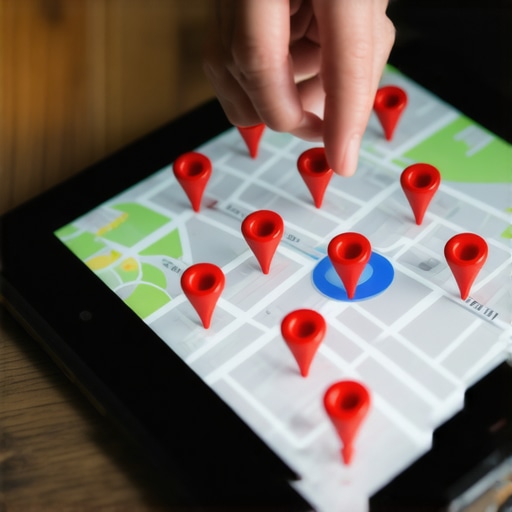
The map spam fighting guide for service-area based businesses
I spent three months fighting a hard suspension for a plumbing client whose listing was nuked simply because they shared a suite number with a defunct law firm. Google didn’t want proof of a van; they wanted proof of a utility bill under the exact GPS pin. The dispatcher was frantic. We were losing five figures a week in lead flow. This wasn’t just a technical glitch. It was a failure of the spatial database to recognize a legitimate service area business in a sea of ghost offices. I remember the smell of cold coffee and the hum of the server room while I mapped out the competitor listings that had triggered the algorithmic sweep. The pin moved. The trust vanished. We had to rebuild the entire proximity beacon from scratch.
The ghost in the GPS coordinates
Service area businesses must combat map spam by validating GPS coordinates and service area polygons. Google uses proximity signals and NAP consistency to filter out fake listings. Combatting competitor spam requires a forensic audit of Google Business Profile data to ensure local search prominence remains high. The algorithm is a machine. It does not care about your history. It cares about data points. Every business listing is a point of interest in a coordinate plane. When a competitor stuffs their name with keywords, they are attempting to hijack the centroid. They want to steal the geographical center of the search. This is why you see a plumber from twenty miles away ranking in your backyard. They are using a virtual office. It is a ghost. You must hunt these ghosts. You need to look at the street view. Is there a sign? Is there a truck? If not, the listing is a violation. Reporting these requires a strategy for wiping out map spam without getting your own profile flagged in the crossfire.
“Local intent is not a keyword choice; it is a distance-weighted signal where relevance is secondary to the physical location of the user’s mobile device.” – Map Search Fundamental
Why your physical address is a liability
Physical addresses for service area businesses often trigger profile suspensions if they are linked to co-working spaces or virtual offices. Google prioritizes verified location data and utility bills to confirm business legitimacy. Using a residential address can sometimes be safer than a shared office suite. The logistics of a service area business are unique. You do not have a storefront. You have a fleet. You have tools. You have a dispatch center. Google often struggles to understand this. They want to see a sign. They want to see a front door. When you share a suite number, you are sharing a reputation. If a shady lead gen company used that suite in 2019, you are carrying their ghost. You must learn why location pages get flagged for spam to avoid these traps. A clean history is worth more than a thousand citations. I have seen businesses lose everything because of a legacy black hat footprint. You must scrub the data. You must be invisible where it counts and hyper-visible where the customers are. This is the balance of power in the map pack.
The three mile radius that determines your revenue
Proximity rankings are determined by a three mile radius around the searcher’s location and the business centroid. Expanding this proximity bubble requires local justification triggers and geotagged images. Stabilizing volatile map rankings after an expansion is necessary for long term visibility. The physics of the map pack are brutal. If a customer is four miles away, you might as well be on the moon. This is the proximity filter. It is a digital wall. To break through, you need signals of activity. You need reviews from that specific neighborhood. You need photos of your trucks on those specific streets. When you expand, the algorithm gets suspicious. It thinks you are a lead gen farm. You need services to expand your proximity bubble safely. Do not just buy more pins. That is the path to suspension. You need to prove you are actually there. The math of the check-in is the new currency. A technician opening the app and updating a job status at a customer’s house is a ranking signal. It is a live pulse. It tells Google the business is breathing.
Local Authority Reading List
- Proximity Trend Tracking Software
- GMB Audit Ranking Roadmap
- Map Strategy Survival Guide
- Top 3 Pack Software Tools
- Professional Map Audit Guide
How to survive a mass review removal
Mass review removal often occurs during Google algorithm updates when spam filters detect inconsistent review patterns. Recovering trust signals requires forensic review audits and legitimate customer engagement. Using seo services to fix gmb rankings after a wipeout is essential for restoring prominence. It happened in a single night. A roofer I know lost forty five reviews. These were real customers. The problem was the timing. He had a surge of jobs after a hail storm. Google saw the spike and assumed they were fake. The filter is blind. It does not see the storm; it only sees the graph. To get them back, you need proof. You need invoices. You need emails. You need to recover your map position after a review nuke by providing the paper trail. Cheap review cleanup services often make things worse. They use bots to appeal. Google hates bots. You need a human touch. You need to show that these people exist in the real world. The logistics of trust are complicated. You cannot automate a relationship. You can only document it.
“The proximity filter acts as a digital gatekeeper, often discarding legitimate businesses that fail to prove their physical presence within the designated service polygon.” – Spatial Intelligence Report
The mechanics of a map spam attack
Competitor map spam attacks involve fake 1 star reviews and suggested edits to your business hours or address. Detecting spammy backlinks and black hat footprints is the first step in fighting back. Services to stabilize rankings help prevent traffic loss during these attacks. A competitor wants your spot. They will not outwork you; they will try to break your profile. They suggest your business is closed. They move your pin into the middle of a lake. They report your name for keyword stuffing even if it is your legal name. This is the dark side of local search. You need to be vigilant. You need to monitor your business profile daily. If you see a sudden drop, check your hours. Check your phone number. Competitors use VPNs to suggest edits. Google often trusts these edits if they come from high-level local guides. It is a rigged system. You must fight fire with data. Prove your name with your articles of incorporation. Prove your hours with your dispatch logs. Do not let them win the war of attrition.
Tools for reclaiming your local authority
Local SEO toolkits provide the data cleanup and rank tracking necessary to dominate the 3 pack. Using verified location data and real time position tracking allows businesses to outrank competitors. Choosing the right software is the difference between ranking and vanishing. Most rank trackers are lying to you. They track from a single point. But your customer is mobile. They are moving. You need a tracker that sees the grid. You need to see how you rank at the corner of 5th and Main versus 10th and Broadway. This is the only way to win. I use software that delivers real 3 pack results because I need to see the proximity shifts in real time. If the bubble shrinks, I need to know why. Is it a new competitor? Is it a change in the Google core? You cannot manage what you do not measure. A service area business without data is a van driving in the dark. Turn on the lights. Scrub the legacy black hat footprints. Clean up the toxic links from those old directory blasts. You need to scrub the profile data Google uses to rank you to ensure the foundation is solid.
The forensic audit of service area polygons
Service area polygons must be precisely defined to avoid listing mergers and ranking penalties. Google uses spatial logic to determine if a business truly serves a geographic area. Auditing your location strategy prevents over optimization and visibility drops. When you set your service area, do not just click the whole county. That is a red flag. Be specific. List the zip codes where your trucks actually go. If you say you serve a fifty mile radius but your office is in a basement, Google will filter you out. They look at the travel time. They look at the traffic. They know how long it takes to get from point A to point B. If your service area is physically impossible, you will lose. You must audit your business hours and history to ensure everything aligns with reality. The machine is learning. It knows when you are lying. It knows when you are a real local merchant. Protect your listing. Fight the spam. Hold the centroid. This is how you survive the maps update. The pin is your flag. Do not let it fall.