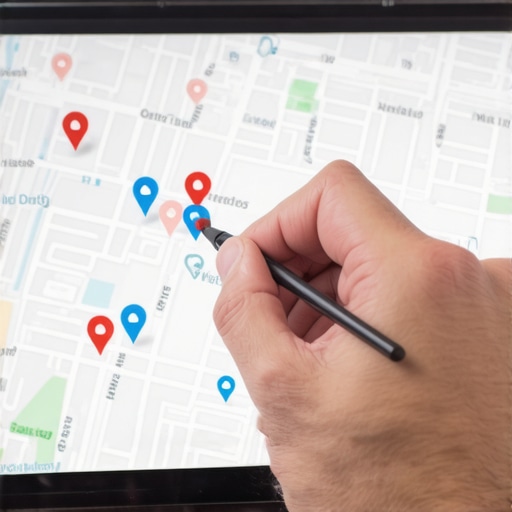
The ghost in the GPS coordinates
Fake lead-gen pins and GMB spam are often identified by unverified addresses, keyword-stuffed business names, and virtual office clusters that violate Google Business Profile terms of service. Cleaning your local map area requires identifying these fraudulent listings through suggested edits and redressal forms while maintaining a clean business hours history to avoid algorithmic suspensions.
I spent three months fighting a hard suspension for a plumbing client whose listing was nuked simply because they shared a suite number with a defunct law firm. Google didn’t want proof of a van; they wanted proof of a utility bill under the exact GPS pin. That experience taught me that the map is not the territory; it is a legal battlefield. The air in my office usually smells like peppermint and old paper, the scent of a man who spends too much time staring at property tax records and business licenses. I have seen honest merchants lose everything because a lead-gen farm moved into their zip code with fifty fake pins. You cannot just report them blindly. You need a strategy that protects your own assets while you purge the parasites.
The math of local search is unforgiving. If a competitor uses a fake address, they are stealing proximity from you. Every time a user searches for your service, the algorithm calculates the distance from the user to the nearest pin. If that pin is a fake listing in a residential basement, you lose the click. You need to understand the reason your competitor ranks higher with fewer reviews than you, which often traces back to their proximity to the search centroid. The pin moved, and so did your revenue. It is that simple.
“Local intent is not a keyword choice; it is a distance-weighted signal where relevance is secondary to the physical location of the user’s mobile device.” – Map Search Fundamental
Why your physical address is a liability
Physical addresses become local search liabilities when they are shared with suspended entities, located in high-spam zip codes, or linked to inconsistent NAP data. To mitigate this risk, businesses must use verified location data, ensure citation consistency, and utilize local seo services for cleaning historic citation spam campaigns to remove toxic digital footprints.
When you are looking at a map, you see streets and shops. I see a spatial database where every coordinate has a trust score. If your shop is in a building that has hosted ten suspended carpet cleaners in five years, your trust score starts in the gutter. This is why securing your map rank when you take over a listing is such a delicate process. You are inheriting the ghost of every business that ever occupied that suite. If the previous tenant was a spammer, Google might flag you for their sins.
I once audited a law firm that could not break into the top three map pack results despite having five hundred genuine reviews. The problem was not their content; it was a mismatched phone number in an old legal directory from 2012. Google saw two different identities for the same pin and decided neither was trustworthy. This is why services to fix mismatched business address and phone number are not just a luxury; they are a survival requirement. You have to scrub the past to own the present. If you do not, the algorithm will treat your legitimate office like a fake lead-gen hub.
Local Authority Reading List
- A complete checklist for manual local profile optimization
- The real world tools that improve local map visibility
- How to wipe out competitor map spam without a profile suspension
- The 3-pack toolkit that actually moves the needle for map rankings
- Why toxic backlinks are the silent killer of local profile authority
The three mile radius that determines your revenue
A three mile proximity radius determines local pack visibility by filtering businesses based on user location, service area polygons, and geo-relevance signals. Expanding this proximity bubble requires hyper-local content, localized backlink profiles, and reputation management to signal prominence beyond the immediate physical centroid.
Proximity is a cold, hard master. You might be the best roofer in the state, but if you are four miles away from the searcher and a mediocre competitor is one mile away, they win. This is the physics of the map pack. To fight this, you must understand why your proximity bubble shrank and how to expand it again through strategic data signals. It is not about getting more reviews; it is about proving you serve that specific neighborhood.
Fake listings thrive because they exploit this proximity logic. They drop pins every two miles to blanket a city. If you want to take them down, you need to use the software that finds hidden map spam in your service area to document their lack of physical presence. Take photos. If the pin is at a UPS store or a vacant lot, document it. Google needs forensic proof before they delete a listing. They do not care about your feelings; they care about the integrity of their data. When you submit a redressal, you are acting as a volunteer data cleaner for a multi-billion dollar corporation. Use that leverage wisely.
“Relevance is secondary to the physical location of the user’s mobile device during a local intent query.” – Location Intelligence Whitepaper 2024
The forensic trace of a service area polygon
Service area polygons define the geographic boundaries where a service-based business (SAB) operates without a public physical storefront. Optimizing these polygons involves verifying service locations through GPS-tagged photos, local check-ins, and JSON-LD LocalBusiness schema to prevent listing suspensions or ranking drops.
If you run a service-area business, your map presence is even more fragile. You do not have a sign on a building to prove you exist. You have a van and a dream. Google is suspicious of you by default. If you try to expand too fast, you will find yourself reading about how to recover ranking power when your service area shrinks because the algorithm flagged your growth as unnatural. You have to move with precision.
Every photo you upload to your profile contains metadata. The latitude and longitude of where that photo was taken are baked into the file. If you are a plumber in Chicago but all your photos are taken in a suburb twenty miles away, the algorithm notices. It creates a mismatch between your claimed service area and your actual behavioral data. This is why how to use verified location data to outrank local competitors is the most underrated strategy in 2025. Your customers are the ones who provide the best proof. Encourage them to take photos at their own homes when you finish a job. That is a proximity signal that no lead-gen farm can fake.
A toolkit to rank higher in local map pack
The best toolkit to improve local search rankings includes proximity tracking software, citation audit tools, and GMB management platforms that monitor 3-pack fluctuations. Selecting which local seo software is actually worth the subscription depends on the tool’s ability to provide real-time map grid data and spam detection features.
You cannot fight a war with a stick. You need a local seo checklist and toolkit for gmb that allows you to see what the customer sees. Most rank trackers are useless because they check rankings from a single data center. You need to know why your rank tracker shows a 3-pack that doesn’t exist for customers who are standing just two blocks away. Proximity shifts every hundred yards.
When looking for local seo software to improve map pack rankings, focus on grid tracking. You want to see a map of your city with little dots showing your rank at every intersection. If you see a sea of green dots around your office but red dots everywhere else, your proximity bubble is too small. You might need to check the local seo software that actually tracks proximity trends to find the gaps in your local authority. These tools also help you spot the fake pins. When a new dot appears on the map and instantly ranks number one, you know you have a spammer to report.
Reputation management and review repair services
Reputation management and review repair services focus on removing fake reviews, auditing review sentiment, and restoring trust signals after negative SEO attacks. Effective review cleanup services use forensic profile analysis to identify VPN-generated ratings and competitor-driven spam that violates Google’s review guidelines.
Reviews are the emotional layer of the algorithm. They are also the easiest thing to fake. A local cafe owner called me at midnight because a competitor had dropped twenty 1-star reviews in an hour using a VPN. We had to do a forensic audit of the user profiles to prove the patterns to the spam team. It was exhausting. If you are in this situation, you should look into 7 tactics for cleaning up a profile hit by a negative review attack before you panic. Do not reply with anger. Reply with facts.
The algorithm looks for keywords in reviews, but it also looks at the history of the person leaving the review. If a user has left five hundred reviews for businesses in fifty different countries, Google knows they are a professional reviewer for hire. This is why the problem with using cheap review cleanup services for your profile is so significant. If the service uses shady tactics to remove reviews, they might get your entire listing banned. You need services to restore trust signals for local seo that operate within the rules. Slow and steady wins the map pack.
Recovering from a google penalty
To recover from a google penalty in local search, businesses must purge toxic backlinks, re-verify location data, and correct NAP inconsistencies across the local citation ecosystem. Successful seo services to recover from google penalty involve a comprehensive audit of technical 404 errors and manual profile optimization to regain map visibility.
Getting a suspension notice is like getting a letter from the IRS. It turns your stomach. But most penalties are avoidable. If you have been hit, you need the checklist for recovering a suspended google business profile to start the process of rebuilding. Most of the time, the penalty is tied to your website. If your site is full of broken links, the map listing suffers. I have seen why your local profile rank is tied to your sites 404 error count firsthand. Google sees a broken site and assumes the business is also defunct.
You also need to be careful with your backlink profile. Many agencies sell local seo services for cleaning historic citation spam campaigns because they spent years building trash links that now hurt their clients. If you have toxic links, you need to know how to purge toxic backlinks from your local profile for better rank. Do not let a bad decision from three years ago kill your business today. The map is a living thing. It requires constant pruning and care. If you ignore it, the weeds will take over, and the lead-gen ghosts will win. Stay vigilant. Keep your data clean. Smelling like peppermint and old paper is a small price to pay for a top-three ranking.