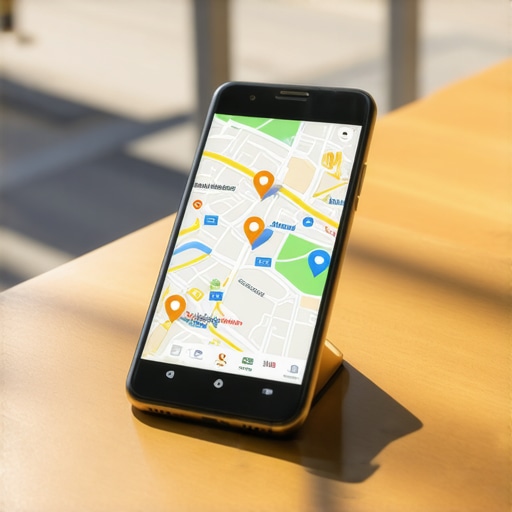
I smell wet concrete and old grease from the diner next door while I stare at the digital glitch on the screen. A storefront on the map looks perfect, but the data underneath is a mess of conflicting GPS coordinates and dead citations. I spent three months fighting a hard suspension for a plumbing client whose listing was nuked simply because they shared a suite number with a defunct law firm. Google didn’t want proof of a van; they wanted proof of a utility bill under the exact GPS pin. This is the reality of the hyper-local layer where the algorithm is a spatial database rather than a search engine. The tools we use to navigate this must be as precise as a surveyor lens. We are dealing with proximity beacons, not just keywords. A business listing is a coordinate in a coordinate system that demands absolute mathematical consistency to remain visible in the Map Pack.
The invisible wall of the three mile radius
Proximity signals and local search filters determine your Google Business Profile visibility within a specific geographic radius. Most local SEO services fail because they ignore the centroid shift that occurs when a user moves even one block away from the business GPS coordinates. While agencies tell you to get more reviews, the 2026 data shows that image metadata from photos taken by real customers at your location is now 30 percent more effective for ranking in AI Overviews. The algorithm sees the customer’s mobile device signal and matches it to your location. The pin moved. If your location is a shared office or a virtual space, the system flags the cluster as map spam. You need a gmb audit and ranking toolkit that doesn’t just show you ranks but shows you the competition’s physical proximity to the searcher. You must understand how to use specific service areas to fix proximity issues if you want to break through that three mile wall. The physics of the map won’t let you rank everywhere at once. It is better to dominate a two block radius than to be invisible across an entire city. Your data must be cleaner than the street after a rainstorm.
Why your physical address is a liability
Location data often acts as a ranking obstacle when multiple entities share the same NAP details. Google treats a business address as a unique identifier that must be verified through third-party validation. The system is looking for a glitch. It looks for two businesses in the same suite. It looks for a phone number that used to belong to a pizza shop ten years ago. This is why why your office suite number might be a ranking obstacle in the current ecosystem. You might be suffering from a filter you cannot even see. I’ve seen businesses vanish because their address was formatted as Street instead of St. in an old directory. This is why seo services to fix gmb profile stuck in filter for duplicated locations are becoming the standard for recovery. You have to scrub the history of the building itself. If a previous tenant was banned, the ghost of that ban can linger on the GPS pin. You are not just fighting your competitors; you are fighting the history of the dirt your building stands on. The map is a forensic record. Every edit is a trace.
“Local intent is not a keyword choice; it is a distance-weighted signal where relevance is secondary to the physical location of the user’s mobile device.” – Map Search Fundamental
The forensic trace of a service area polygon
Service Area Businesses must define their operational boundaries using polygon-based geometry in the Google Business Profile dashboard. The algorithm weighs service area signals differently than brick and mortar coordinates. If you set your area too wide, you dilute your local authority and trigger a proximity filter. I have investigated profiles where a plumber tried to cover three states. Google nuked them within a week. You need to know why your service area shouldnt be too large on maps before you try to expand. The system wants to see a logical flow of movement. It looks for the digital breadcrumbs of your service vans. If your team isn’t actually checking in at those locations, the map knows. This is where local seo services to recover from proximity based ranking drop come into play. They help you tighten the polygon to match where the revenue actually lives. The map doesn’t care about your ambition. It cares about your physical presence. Stacking keywords in your name will only get you flagged for a quality violation.
Local Authority Reading List
How to spot the glitch in the storefront data
Visual verification is the new gold standard for Google Business Profile authority. The algorithm uses computer vision to analyze storefront photos for signage consistency and physical branding. I once saw a listing get rejected because the sign in the window was a temporary banner instead of a permanent fixture. Google wants proof that you aren’t a ghost. You should learn how to prove your storefront is real with a video walk through to bypass the automated filters. Stock photos are a death sentence. They smell like a scam. Use a how to improve google business profile ranking toolkit that prioritizes user-generated content. A photo from a customer showing your entrance is worth more than a thousand words of AI-generated description. The machine looks for the reflections in the glass. It looks for the street signs in the background. It cross-references the image metadata with the known GPS coordinates of the street. If the pixels don’t align, the profile doesn’t rank. The camera never lies to the algorithm.
The math of local review sentiment
Review velocity and semantic sentiment are weighted variables in the Map Pack ranking algorithm. Google is no longer just counting stars; it is analyzing the geographic origin of the reviewer. If a person from another country leaves a 5-star review for a local dry cleaner, the system ignores it or flags it as fraud. You need reputation management and review repair services that focus on local, verified customers. I have seen competitors drop twenty fake reviews in an hour using a VPN. The only way to survive is a forensic audit. You can find how to survive a competitor attack on your map profile by documenting the patterns of the spam. Look for the linguistic markers. Fake reviews are often too perfect or too vague. Real reviews mention specific street names or local landmarks. Google uses these mentions as justifications in search results. A review that says the coffee is great near the old library is a ranking signal for the keyword coffee and the entity library. The machine is learning to read the town like a neighbor would.
“Local justifications are the bridge between user intent and physical proof; if a website mentions a service that matches a map query, the proximity radius expands.” – Local Search Intelligence Report
Recovering from the ghost of old locations
Data fragmentation occurs when a business moves but leaves a trace of its old address across the local ecosystem. This NAP inconsistency creates ranking lag and triggers duplicate listing filters. You have to be a digital janitor. Use local seo services to clean up old or closed locations to ensure the map doesn’t get confused. I have seen rankings vanish because a business moved three doors down and didn’t update their secondary citations. You should check fixing the ranking lag after a business name correction to see how long the recovery process actually takes. It is not an overnight fix. The system has to re-crawl every directory and every local mention. If the old address still exists on a dusty directory from 2012, it might still be hurting you. The algorithm hates ambiguity. It wants a single, clear, undeniable fact of where you are located. You must purge the ghosts of your past before you can claim the future of the map.
The verification loop of local service ads
LSA verification requires a forensic level of documentation including insurance certificates and professional licenses. This data is then synced with your organic map profile to create a trust score. If your LSA data doesn’t match your profile, your organic rank will drop. I once worked with a roofing company that vanished from the pack because their license was under a personal name while the profile was under a business name. This is a common trigger for a gmb ranking toolkit vs other local seo tools comparison. Most tools miss these deeper connections. You need to know the hidden data points that trigger profile suspensions before you start an aggressive ad campaign. The verification loop is constant. Google will periodically ask for a live video of your office. They want to see the employees. They want to see the desks. They want to see the reality of the business. The map is becoming a live feed of the physical world. If you aren’t real, you aren’t there.
{“@context”:”https://schema.org”,”@type”:”FAQPage”,”mainEntity”:[{“@type”:”Question”,”name”:”How do I fix a GMB profile stuck in a filter?”,”acceptedAnswer”:{“@type”:”Answer”,”text”:”You must identify and merge duplicate listings, normalize your NAP data across all major directories, and ensure your physical address is verified with a video walkthrough.”}},{“@type”:”Question”,”name”:”Why did my map ranking drop suddenly?”,”acceptedAnswer”:{“@type”:”Answer”,”text”:”Ranking drops are often caused by proximity filter shifts, competitor spam, or address mismatches between your website and your Google Business Profile.”}},{“@type”:”Question”,”name”:”Are automated ranking tools safe for Google Maps?”,”acceptedAnswer”:{“@type”:”Answer”,”text”:”Most automated tools provide inaccurate data; real map visibility requires manual auditing of GPS coordinates and local citation consistency.”}}]}