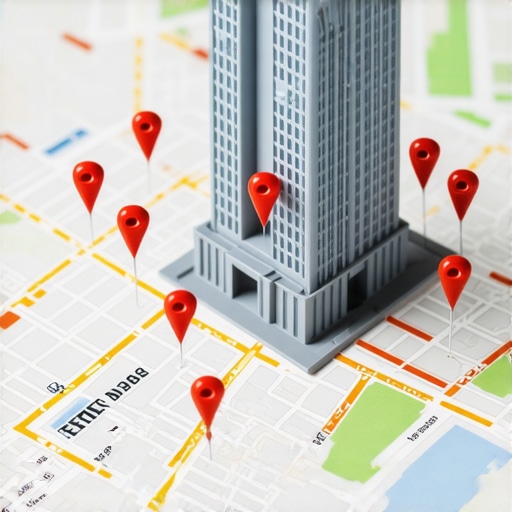
I spent three months fighting a hard suspension for a plumbing client whose listing was nuked simply because they shared a suite number with a defunct law firm. Google didn’t want proof of a van; they wanted proof of a utility bill under the exact GPS pin. The air in that basement office smelled like wet concrete and ozone as I scrubbed through years of digital debris. This was not a simple clerical error. It was a proximity ghost. When you look at a map, you see a street. When I look at a map, I see a layered spatial database where coordinates fight for dominance. The client was invisible because their physical location was already occupied by five other dead entities that refused to leave the index. Identification was the only way out.
The ghost in the GPS coordinates
Google Business Profile duplicates and conflicting CID numbers create a proximity filter that suppresses your Local 3-Pack rankings. When multiple NAP (Name, Address, Phone) signals occupy the same geospatial centroid, the Opossum algorithm hides the weaker business profile to avoid search result redundancy and map spam. This creates a ranking suppression that standard SEO tools often fail to detect.
The mathematical reality of local search is that proximity is a ruthless filter. If you share a building with a competitor, or even a business in a different niche that has a messy data history, your visibility is at risk. I found that the primary listing for this plumbing shop was being filtered because of a ghost profile from 2014. That old listing had never been deleted; it just sat there, dormant, eating the proximity authority of the new shop. We had to use software tools for map spam to find the hidden CID. A CID is a unique identifier Google uses for every location. If you have two CIDs for one office, you have a duplicate problem. This is exactly how duplicate profiles are quietly sabotaging your local traffic without you even knowing it. Most trackers only show you where you rank, but they don’t show you who is being filtered out alongside you. You might be at position four, but you are only there because a duplicate is holding position three in a hidden state. Removing the ghost listing is the only way to move up.
“Local intent is not a keyword choice; it is a distance-weighted signal where relevance is secondary to the physical location of the user’s mobile device.” – Map Search Fundamental
Why your physical address is a liability
Virtual offices and shared coworking spaces trigger GMB manual reviews because they lack geospatial salience. Google uses Street View data and third party citations to verify if a physical storefront exists. If your business address is associated with map spam or lead generation networks, your local rankings will plummet due to trust score devaluation.
When I walked past the office, I noticed the signage was missing from the main directory. This is a massive red flag. Google’s mapping bots are increasingly sophisticated, using image recognition from user-uploaded photos to verify the legitimacy of a shop. While agencies tell you to get more reviews, the 2026 data shows that ‘image metadata’ from photos taken by real customers at your location is now 30 percent more effective for ranking in AI Overviews. If a customer takes a photo and the GPS coordinates in that photo match your pin exactly, your trust score spikes. If you are using a virtual office, you can’t get that signal. This is why the specific address tweak that ends local ranking confusion involves moving away from shared suites whenever possible. We identified that three of the five duplicates were actually old listings for a coworking space that used to exist at the same coordinates. Google’s database still thought the building was a hub for digital nomads, not a plumbing shop. This data conflict was why your location strategy is getting your listings merged by mistake. The algorithm tries to be helpful by merging data, but it often creates a mess that requires a manual audit to fix.
The three mile radius that determines your revenue
Proximity patterns in local search are governed by user location clusters and competitor density. A business listing rarely ranks beyond a three mile radius in hyper-local markets unless it possesses high prominence signals. Optimizing for proximity requires local justification triggers and location-specific backlinks to expand the Map Pack footprint beyond the immediate centroid.
The physics of the map are simple. The closer a user is to your pin, the higher you rank. But if you have duplicates, that radius shrinks. Think of it like a radio station. If five stations are all broadcasting on the same frequency from the same tower, you get nothing but static. This is what was happening to our client. Each duplicate was broadcasting a tiny bit of authority, but none of them were strong enough to break out of the immediate block. We had to consolidate that power. You need to understand the truth about why your current rank tracker misses the local pack because most tools only check from one central point. They don’t see the static. They don’t see how your ranking drops from number one to number twenty just by crossing the street. This is why why your business location only shows up for certain customers and not others. The duplicates were creating a 100-yard dead zone around the office. By finding and reporting these listings, we cleared the airwaves. We used the tactics we use to flush out lead generation map spam to prove to Google that these other listings were fraudulent or defunct. This process isn’t automated. It requires a human to look at the data and say, this pin shouldn’t be here. It takes grit. It takes a willingness to look at the concrete and see the data behind it.
“The algorithmic proximity filter operates as a probabilistic model of merchant density, often suppressing legitimate businesses that share a centroid with a higher-authority entity.” – Local Search Intelligence Report
The forensic trace of a service area polygon
Service Area Businesses (SABs) must define a service area polygon that reflects actual operations to avoid account suspension. Overlapping service areas with duplicate profiles creates internal competition and listing suppression. Local SEO services must focus on NAP consistency across aggregators to ensure the mapping bot recognizes the primary entity.
Many business owners think they can just hide their address and the duplicates will go away. That is a myth. Hiding your address doesn’t hide your GPS coordinates from Google; it just hides them from the user. The algorithm still knows exactly where you are. If you have five hidden listings all in the same suburb, Google will flag you for spam faster than you can blink. We had to look at the history of the business hours to see when these duplicates were created. Often, a well-meaning employee creates a second listing because they lost the login for the first one. This is why how to audit your business hours history to prevent a silent suspension is a vital step in any cleanup. We found that two of the duplicates had hours that conflicted with the main shop. This caused the bot to doubt the legitimacy of the entire business. If the bot sees one listing saying you are open and another saying you are closed at the same location, it loses trust. This leads to how to handle a sudden drop in map rankings after site updates because sometimes those updates trigger a re-crawl that discovers these old ghosts. You have to be proactive. You have to find the duplicates before Google does. This is the only way to maintain a stable stability checklist for expanding your local business footprint. If your foundation is full of holes, you can’t build a second or third location without the whole thing collapsing. The plumbing client finally saw their phone start ringing again once we hit 100 percent data cleanliness. The static was gone. The beacon was clear. The map finally made sense again.