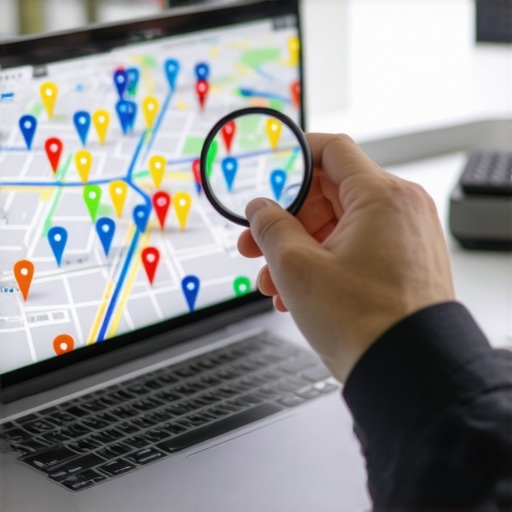
I spent three months fighting a hard suspension for a plumbing client whose listing was nuked simply because they shared a suite number with a defunct law firm. Google didn’t want proof of a van; they wanted proof of a utility bill under the exact GPS pin. The air in my office smelled like wet concrete and cold coffee as I zoomed into the satellite view, trying to prove to a support rep in a different time zone that a physical wall existed between two separate businesses. This is the gritty reality of the local search layer. It is not about keywords or pretty pictures. It is about the forensic verification of a proximity beacon in a spatial database. If your pin moves by ten feet, your revenue can drop by forty percent. I have seen it happen. I have watched merchants lose everything because a competitor used a VPN to drop twenty fake reviews in an hour. To survive here, you must stop thinking like a marketer and start thinking like a logistics manager who is obsessed with the flow of data and the physics of a three mile radius.
The tools that reveal the hidden map layer
Local SEO experts audit map positions by verifying the physical proximity of the business to the searcher, ensuring NAP consistency, and identifying competitor map spam. These tools analyze centroid data, local justification triggers, and category salience to diagnose ranking drops or profile suspensions in the Google Map Pack. To get a real view of the landscape, you cannot rely on a standard browser. You need to understand how to find map trackers that show the real 3-pack for your area because the results you see at your desk are not what your customers see on the street. The algorithm is now mobile-first and distance-weighted. If your tracker does not account for the specific GPS coordinates of a mobile device, it is feeding you useless data. Most people fail because they use a tool that checks rankings from a single data center. That is a fatal mistake. You need to see a grid of the city, where every 500 meters represents a new search environment. This is why the local seo software that actually tracks proximity trends is the only way to see if your visibility is expanding or shrinking. When you audit a profile, you are looking for the glitch. You are looking for the mismatched phone number in a secondary verification tier that kills your organic trust score. I have seen a top-ranking roofing company vanish because of a single typo on a local directory. These are the silent killers of map prominence.
Why your physical address is a liability
A business address serves as the primary anchor for the Google Business Profile, but it also acts as a potential point of failure if shared with other entities or located too far from the search centroid. Auditing your address involves checking for suite number overlaps, hidden service area polygons, and historical location data resets. Google is suspicious of everyone. If you are a service area business, your address is a target. You might think hiding your address protects you, but it actually places you under a more intense forensic loop. Many owners find that why your business address keeps reverting to an old location is due to a conflict in the underlying map database. The system remembers where you were five years ago. If a stray citation on a dead directory still lists your old shop, Google might merge your new listing with a defunct one. This is why you need shielding your business from future map profile suspensions as a core part of your strategy. You must scrub the web of old data. Every inconsistent mention of your office is a signal of low trust. I once saw a listing get nuked because they changed their Saturday hours by thirty minutes without updating their website. The bot saw the discrepancy and flagged the account for a manual review that lasted weeks. This is the level of precision required today.
“Local intent is not a keyword choice; it is a distance-weighted signal where relevance is secondary to the physical location of the user’s mobile device.” – Map Search Fundamental
Signals that trigger the local justification loop
Google uses behavioral signals such as click-through rates, direction requests, and review sentiment to create justifications in search results. These snippets prove to the user that a business is relevant to their specific query, often pulling data from customer photos, review text, and live inventory. When a user searches for a specific service, Google looks for proof that you have performed that work. This proof is often found in the metadata of images. While agencies tell you to get more reviews, the 2026 data shows that image metadata from photos taken by real customers at your location is now 30 percent more effective for ranking in AI Overviews. This is the information gain that the algorithm craves. If you are struggling with a sudden dip, you should look at how to handle a sudden drop in map rankings after site updates because your internal link structure might be failing to support your local pages. If your contact page has a broken link, your map prominence will suffer. It is all connected. You should also check why your local profile rank is tied to your sites 404 error count. A healthy website is a prerequisite for a healthy map listing. You cannot have one without the other. The bot needs to see a clear path from your profile to a functional, localized landing page. If it hits a dead end, it will simply demote your pin in favor of a competitor with a cleaner site architecture.
How to survive a mass sweep of your data
Recovery from a Google Business Profile suspension or a mass review removal requires a forensic audit of user profiles, backlink health, and historical business hours. Experts use manual reporting and specialized software to identify fake lead generation pins and toxic links that trigger algorithmic penalties. If you find yourself in a situation where your reviews have vanished, you need to know recovering your reputation after a mass removal of genuine reviews is a slow process of proving authenticity. Do not buy more reviews to fix the problem. That is like trying to put out a fire with gasoline. Instead, focus on cleaning your digital footprint. You must understand how to identify and disavow toxic local backlinks before a penalty hits your profile. Many businesses are attacked by competitors who buy thousands of low-quality links and point them at your site. This is a common tactic in the plumbing and locksmith niches. You need to be proactive. If you see a spike in weird traffic, audit your link profile immediately. You should also be aware of 7 tactics for cleaning up a profile hit by a negative review attack so you can respond without getting your own account flagged for suspicious activity. The goal is to show Google that you are a stable, legitimate entity that provides value to the local community.
Local Authority Reading List
- The only local seo checklist you need to stay in the 3-pack
- The software tools that actually help you manage map spam reporting
- The impact of a clean business hours history on your local trust score
- How to clean your backlink profile without killing your map authority
- Why manual review cleanup is the only safe way to restore your rank
The three mile radius that determines your revenue
The proximity filter is the most powerful element of the local algorithm, often overriding traditional SEO signals like domain authority or link count. Businesses must optimize for the specific neighborhood centroids and user movement patterns within their immediate service area to maintain 3-pack visibility. Proximity is a harsh master. You can have the best website in the world, but if you are four miles away from the searcher and a competitor is two blocks away, you will lose. This is why you need to understand why your proximity ranking is failing despite great reviews. It might be that your primary category is slightly off, or your service area polygon is too broad. Google prefers businesses that have a tight, focused geographic relevance. If you try to claim an entire state, you will rank for nothing. If you focus on a five block radius, you will dominate. This is where the local seo software that actually tracks proximity trends becomes invaluable. It shows you exactly where your influence ends. You can then use the 3-pack toolkit that actually moves the needle for map rankings to target those specific gap areas. Sometimes the fix is as simple as adding more localized content to your site or updating your business hours. You must remember the fix for inconsistent business hours history that triggers suspensions because Google views your hours as a promise to the user. If you break that promise, you are out of the game.
“A service area business without a verified physical footprint is a ghost in the machine, and Google’s Vicinity update was the exorcism designed to remove them from the Map Pack.” – Local Search Intelligence Report
The data driven approach to choosing a toolkit
Selecting the right software for map auditing requires a focus on real-time data ingestion, multi-point grid tracking, and competitor spam identification features. Standard SEO tools often lack the spatial intelligence required to monitor the hyper-local shifts of the Google Business Profile environment. Do not settle for a tool that just tracks your rank. You need a tool that tracks the competition. You need to know how to scrub fake keywords from your competitors map listings because if they are cheating, they are stealing your customers. Use a toolkit that identifies when a competitor adds “best plumber in the city” to their business name in violation of the terms of service. This is a common tactic, and it works until someone reports it. You should also check the data driven way to choose a local seo toolkit for your business to ensure you are getting accurate information. Many tools give you completely false data because they cannot bypass Google’s personalized search filters. A professional audit looks at the raw JSON-LD attributes of your profile. It checks for the `geo` coordinates, the `hasMap` URL, and the `openingHoursSpecification`. If these technical details are wrong, your ranking will be suppressed. The pin must be perfect. The data must be clean. The strategy must be relentless. This is how you win the war for the Map Pack.