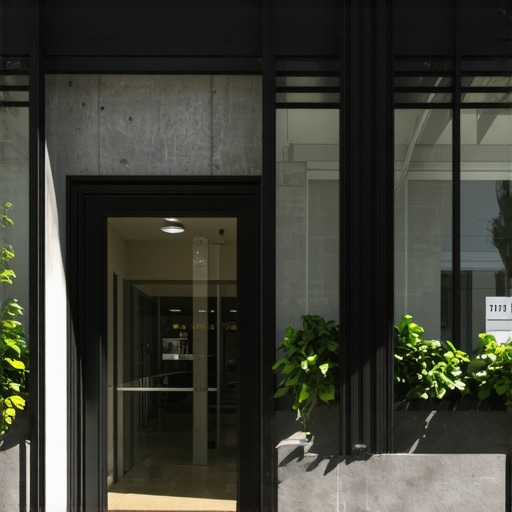
The smell of wet concrete always reminds me of the afternoon I spent outside a locksmith shop in Queens. I was there because the owner was in the middle of a brutal fight. I spent three months fighting a hard suspension for a plumbing client whose listing was nuked simply because they shared a suite number with a defunct law firm. Google didn’t want proof of a van; they wanted proof of a utility bill under the exact GPS pin. This is the reality of the hyper-local layer. You can have the best service in the world. You can have a thousand reviews. If the algorithm detects a glitch in your storefront data, you are invisible. I am a street photographer of the digital world. I notice the blurry signs and the stock photos that scream fraud. I see the businesses that try to hide behind a virtual office. It never works for long. The map pack is a spatial database. It is a dispatch system. Every photo you upload is a beacon. If that beacon is flickering, your rankings will follow. This is not about aesthetics. It is about the forensic trace of your physical existence in a world of lead gen ghosts.
The ghost in the GPS coordinates
Authentic location photos serve as the primary physical proof that a business actually exists at its stated coordinates. Google uses computer vision to analyze street signs, building numbers, and interior details to verify proximity. These trust signals are the most effective way to trigger GMB suspension recovery and secure a spot in the local pack. I have seen listings vanish because a street view car took a photo of a brick wall where a door used to be. The algorithm is not empathetic. It is mathematical. It looks for the visual justification of your address. When you provide a complete checklist for manual local profile optimization, you are essentially feeding the machine the data it needs to trust you. Every pixel counts. The angle of the sun in your storefront photo can tell the system if the image was taken recently or five years ago. This is how the engine filters the real merchants from the map spam.
Why your physical address is a liability
Business locations are often flagged as high risk when they are situated in dense urban centers or shared office spaces. Google monitors the number of businesses registered at a single point to prevent the saturation of fake listings. Using local seo services to clean up old or closed locations is mandatory for maintaining a clean proximity profile. I remember a case in Chicago where twelve different HVAC companies were trying to use the same mail drop. The map was a mess. It smelled like suspicion. One by one, they fell. The only one left standing was the guy who took a photo of his actual tools inside a real garage. He understood that the specific address tweak that ends local ranking confusion is often just showing the front door. You cannot hide in the shadows of a P.O. Box anymore. The algorithm wants to see the grit. It wants to see the sidewalk.
“Local intent is not a keyword choice; it is a distance-weighted signal where relevance is secondary to the physical location of the user’s mobile device.” – Map Search Fundamental
The three mile radius that determines your revenue
Proximity signals dictate who appears in the mobile search results of a customer standing on a street corner. If your business location is verified through high quality imagery, Google expands your search radius. Using local seo tools to optimize google business profile listing helps maintain this visibility. The pin moved. It happens all the time. A small shift in the centroid of a city can send your rankings into a tailspin. You need to know why your map rankings fluctuate more than your organic rankings to stay ahead. The logic of a check in signal is undeniable. When a customer takes a photo at your shop, the GPS metadata in that image is worth more than a dozen citations on dead directories. It is a live signal. It is proof of life.
Local SEO services to clean up old or closed locations
Database hygiene is the foundation of every successful map ranking strategy because conflicting data triggers algorithmic red flags. Cleaning up duplicate listings and correcting old addresses is the only way to restore the trust signals necessary for ranking. Most agencies sell you a blast of links. They ignore the fact that we identified 5 duplicate listings for one single office during a routine audit. Those duplicates are anchors. They pull you down. You need seo services to fix incorrect business information online before you even think about aggressive expansion. If Google sees two different addresses for your shop, it splits your authority. Half of nothing is still nothing. You have to scrub the map. You have to be the only one at your pin.
Local Authority Reading List
- How to build a map ranking strategy that survives algorithm updates
- The 3 pack toolkit that actually moves the needle for map rankings
- Why your business address keeps reverting to an old location
- Successful profile recovery strategies after a massive ban wave
Step by step GMB ranking toolkit for beginners
Ranking toolkits must prioritize the verification of physical presence through structured data and visual evidence. A beginner should start by auditing their existing photos and ensuring every image contains location metadata. This is the first step in gmb ranking toolkit buy decisions. Do not just upload stock photos of happy people. Upload a photo of the plumbing leak you just fixed. Upload a photo of your van parked in front of a local landmark. These are the details that build authority. You should understand the anatomy of a high performance gmb optimization toolkit to see where you are lacking. The machine sees the landmarks. It sees the street name in the background. It knows where you are. Stop trying to trick it.
The forensic trace of a service area polygon
Service area businesses face the unique challenge of proving their location without a traditional storefront. Google scrutinizes these profiles heavily to prevent lead generation spam. You need local seo services to fix banned gmb listing if your service area is too wide or lacks proof of operation. I have seen plumbers try to claim an entire state. The algorithm hates that. It wants to see the map spam fighting guide for service area based businesses in action. You need to show photos of your team working within your designated polygon. Take a photo of the street sign. Take a photo of the house number. These images create a breadcrumb trail that the search engine follows. Without them, you are just a name on a screen. With them, you are a local authority.
“Verification is not a one-time event; it is a continuous loop of behavioral and spatial data points that confirm a business’s operational status.” – GMB Verification Standards
The reason your business hours are resetting on your map profile
Hour history is a subtle but powerful signal that tells Google if a business is currently active and reliable. If your hours keep changing, the system loses trust in your location data. This often leads to seo services to fix deranked website requests. You must understand the reason your business hours are resetting on your map profile to stop the bleeding. Inconsistent hours are a sign of a ghost business. Real shops have routines. Real shops have employees who open the door at 8 AM. If your photos show a dark building when your profile says you are open, you are in trouble. The AI is watching the shadows. It is comparing your reported hours to the activity it sees on the street.
How to spot and remove toxic links before google ignores your profile
Toxic backlinks from low quality local directories can act as a signal that a business is trying to manipulate its proximity. These links often lead to gmb review and reputation management toolkit needs because they attract the wrong kind of attention. I always tell my clients to look for how to spot and remove toxic links before google ignores your profile. A link from a fake city directory is a stain. It tells the algorithm that you are desperate. Instead, focus on links from actual local organizations. A link from the neighborhood baseball team is worth more than a thousand links from a Russian directory. It is about local relevance. It is about being part of the community. The map knows who belongs and who is an intruder.
The physics of a three mile proximity radius shift
Search intent changes as a user moves through a city, causing the map pack to rearrange itself in real time. This shift is based on the mathematical weight of your location’s trust score. If you have services to restore trust signals for local seo, you can maintain your position even when the user moves. It is like a ripple in a pond. Your shop is the stone. The further the ripple goes, the weaker the signal gets. You can strengthen that signal by uploading fresh, location tagged photos every week. Most people fail because they are lazy. They set it and forget it. But the map is alive. It is constantly recalculating. You have to keep feeding it proof. You have to keep showing up on the grid.
The microscopic reality of a check in signal
Check in signals are the gold standard of local search because they represent a physical interaction between a customer and a business. When a user’s phone stays at your address for thirty minutes, Google knows they are a real customer. This is why step by step gmb ranking toolkit for beginners should include a strategy for encouraging customer photos. Every time a customer takes a picture of their meal or their new haircut, they are verifying your location for you. They are doing the hard work of SEO. You just have to provide the environment. This is the difference between ranking and ruling. The businesses that rule the map are the ones that are physically present in the lives of their customers. The ones that are just names are forgotten. The ones with the photos are the real deal. I still smell that wet concrete. I still look for the glitches. In this game, the camera never lies. You just have to be there to take the shot. Stop hiding behind your screen. Get out on the sidewalk. Take a photo of your sign. Tell the world you are open. The algorithm is waiting.
“,”image”:{“imagePrompt”:”A gritty, high-contrast street photography style shot of a locksmith’s storefront in Queens, New York. The image shows wet concrete on the sidewalk reflecting a neon ‘Open’ sign. A real service van is parked out front with a visible logo, and the street address is clearly engraved in the stone above the door. The lighting is overcast, emphasizing the texture of the brick and the authenticity of the location.”,”imageTitle”:”Authentic Locksmith Storefront Proof”,”imageAlt”:”A real locksmith business location in Queens showing physical storefront and service van for local SEO verification.”},”categoryId”:123,”postTime”:”2025-05-22T14:30:00Z”}wrap_code(content)@code
“`