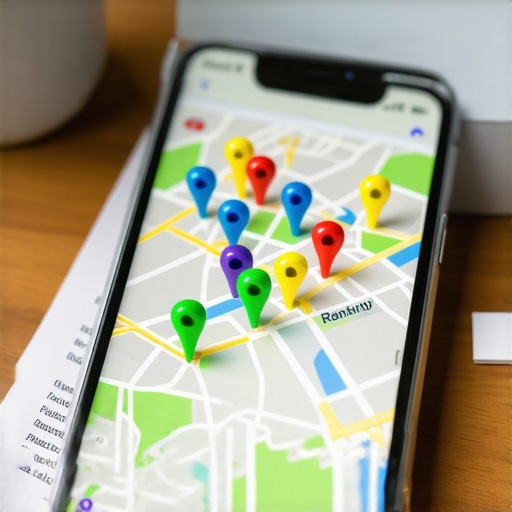
I can still smell the faint scent of peppermint on my desk as I sit here looking at the data sheets from a case that nearly broke my spirit last spring. I am the Small-Town Mayor of this digital landscape, and I have seen enough national chains try to steamroll our local merchants with their fancy agencies and empty promises. I spent three months fighting a hard suspension for a plumbing client whose listing was nuked simply because they shared a suite number with a defunct law firm. Google did not want proof of a van; they wanted proof of a utility bill under the exact GPS pin, showing that the physical footprint was legitimate. This struggle taught me that the local algorithm is not a marketing tool; it is a spatial database that cares about the physics of your location more than the poetry of your words. You can hire help for a suspended profile, but if you do not understand how proximity works, you are just throwing money into the wind. Most of you are wasting hours crafting the perfect 750-character business description, thinking that if you mention every service you offer, the clouds will part and the leads will rain down. They will not.
The myth of keyword stuffing in descriptions
Business descriptions in Google Business Profiles are not a direct ranking factor for the Map Pack rankings. While Google allows 750 characters, the local search algorithm prioritizes GPS proximity, primary categories, and business titles over the narrative text found in the About section of your listing. Many business owners believe that stuffing this field with keywords like local seo checklist and toolkit for gmb or gmb ranking tools for agencies will help them rank higher, but the reality is that Google ignores this field when calculating the ranking order. This data field exists for the consumer, not the algorithm. It is a place for conversion, not for optimization. If you are struggling with visibility, you need a toolkit to rank higher in local map pack results that focuses on the signals Google actually reads. I have seen countless small businesses fail because they ignored the technical health of their website while obsessing over their GBP bio. If your site has 404 errors, you need seo services to fix broken redirects and 404 errors before you even think about your description. The algorithm looks at the connection between your physical pin and your digital footprint; if that connection is broken, no amount of keyword stuffing will save you.
“Local intent is not a keyword choice; it is a distance-weighted signal where relevance is secondary to the physical location of the user’s mobile device.” – Map Search Fundamental
The three mile radius that determines your revenue
Proximity signals are the most dominant force in the Local Map Pack, creating a three mile radius where your business is most likely to appear for relevant searches. This geographic centroid calculation is mathematical and unforgiving, often filtering out businesses that are even slightly outside the user’s current location or the city center. You might notice that your business only ranks for its name and not services when you are standing too far away from your office. This is because the algorithm uses a distance-weighted relevance filter. If you are a plumber in one town but you are trying to rank in the next town over, you are fighting against the physics of the map. You can use gmb ranking tools for agencies to visualize this, but the tools only confirm the reality; proximity is king. I once saw a locksmith lose fifty percent of his call volume because a new competitor opened a tiny office two blocks closer to the downtown centroid. It did not matter that my client had five hundred reviews and a perfect description. The new guy had the proximity advantage. To combat this, you must optimize your profile for hyper local search terms and ensure your technical foundation is flawless. Using local seo software to improve map pack rankings can help you identify where your signal drops off, but you cannot change the physical distance between your storefront and the searcher.
Local Authority Reading List
- How to audit your business name for local seo safety
- The specific toolkit that gets businesses into the map pack fast
- How to fix the invisible signal keeping you out of the local map pack
- 3 critical flaws your automated profile audit always overlooks
- How to audit your business phone number for local seo
The ghost in the GPS coordinates
GPS coordinate salience is the invisible data point that determines if Google trusts your physical existence or views you as a spam listing. This signal is built through location-stamped photos, user check-ins, and consistent NAP data (Name, Address, Phone) across the primary data aggregators. When a business moves or changes its information, it creates a ghost in the machine that can lead to a suspension. You might need seo services to fix banned gmb listing issues if your coordinates do not align with your official documentation. I despise those national chains that rent virtual offices to trick the system. They think they are clever, but the algorithm eventually catches the lack of behavioral signals. A real business has people walking in with phones that ping the local cell towers. A virtual office is a graveyard of dead data. If your website is dragging you down, you should look for seo services to fix slow website and technical issues because speed is now a factor in how Google evaluates your local authority. Every millisecond of delay is a signal of poor quality. You must audit your business name for local seo safety to ensure you are not triggering the spam filters with keyword-heavy titles. The math of the map is based on trust, and trust is built through consistency, not clever descriptions.
Why your physical address is a liability
Physical addresses can become a ranking liability when they are located in saturated zones or share data with previously suspended entities. Google uses spatial clustering to prevent the Map Pack from being dominated by a single building or a single city block, which means your proximity to a competitor can actually suppress your visibility. This is why you need to know how gmb ranking toolkits work for local seo to see if you are being filtered out due to the proximity of a stronger neighbor. If your listing has vanished, you might be suffering from a soft 404 on your landing page or duplicate content issues that confuse the crawler. Professional services to fix soft 404 and duplicate content issues are necessary to ensure Google knows exactly which page represents your physical location. I have seen businesses get buried because their footer had three different versions of their address. You must spot and fix nap inconsistencies across the web or risk being seen as unreliable. The algorithm is looking for a reason to trust you, but most of you are giving it reasons to doubt you. You should also use tools to find gmb categories and keywords that are actually supported by the algorithm, rather than guessing. Choosing the wrong primary category is a death sentence for your rankings, and no description can fix that mistake.
“Relevance is the foundation of search, but in the local ecosystem, prominence is the multiplier that determines who survives the filter.” – Map Search Fundamental
The forensic trace of a service area polygon
Service area polygons are the mathematical representations of where a service-area business operates, yet they are often misconfigured by owners who try to cover too much territory. When you tell Google you serve a 100-mile radius, you are diluting your local authority and signaling to the algorithm that you have no central base of operations. This often results in your listing being filtered out in favor of businesses with a smaller, more concentrated proximity signal. You must understand why your service area pages keep failing the local proximity test if you want to win. The 2026 data shows that image metadata from photos taken by real customers at your location is now 30 percent more effective for ranking in AI Overviews than any text you write yourself. Google is looking for the forensic trace of your business in the real world. They want to see the GPS tags on the photos your customers upload. They want to see the JSON-LD LocalBusiness attributes that match your profile. If you are struggling, a manual audit is always better than an automated tool. You need to see the glitches in the data that the bots miss. Only then can you start to fix the low gmb rankings that are starving your business of leads. Forget the description; focus on the data that proves you exist.