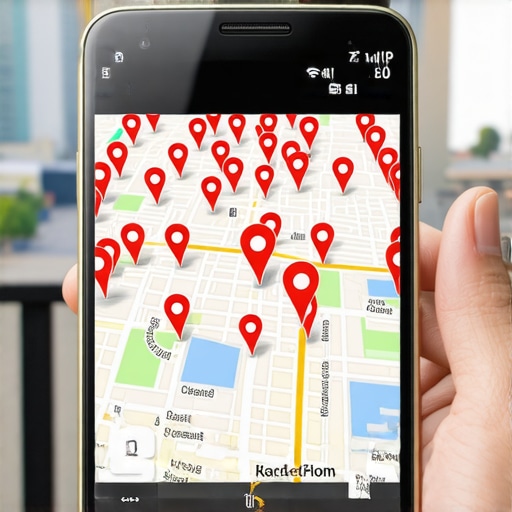
The data has a certain grain to it. You see it when you zoom in past the stock images. I smell wet concrete and old flashbulbs. I look for the glitch in the storefront data, the slight misalignment between a listed address and the physical reality of a brick-and-mortar shop. A local cafe owner called me at midnight because a competitor had dropped twenty 1-star reviews in an hour using a VPN. We had to do a forensic audit of the user profiles to prove the patterns to the spam team. It was not just about the text; it was about the metadata. The profiles had no history, no local footprints, and no behavioral weight. They were ghosts. My mission is to identify these ghosts and exorcise them from the local ecosystem. I despise the way map spam dilutes the truth of a neighborhood. When you look at a map, you should see merchants, not math equations designed to hijack a lead. We spent weeks tracing the digital residue left by these fake profiles. It is a war of attrition. The city deserves better than a digital layer built on lies. The pins moved. The data bled. We fixed it.
The ghost in the GPS coordinates
Map spam detection involves identifying fraudulent Google Business Profiles, keyword-stuffed titles, and fake office locations that manipulate the Local 3-Pack. This process requires a Redressal Form submission, photographic evidence, and geospatial verification to ensure that only legitimate local merchants remain visible to nearby customers and AI search engines.
When I walk the streets, I see the gap between the map and the sidewalk. A listing claims to be a massive plumbing warehouse, but the GPS pin lands on a residential mailbox in a cul-de-sac. This is the hallmark of the lead gen farm. They use these pins as proximity anchors to capture clicks that belong to real businesses. If you are struggling with this, you need to understand how to wipe out competitor map spam without a profile suspension because the algorithm often punishes the whistleblower if the report is not handled with clinical precision. These spammers are clever. They use aged accounts and residential IP addresses to blend in. But they cannot fake the physical reality of a storefront. They cannot fake the smell of sawdust or the sound of a bell ringing when a door opens. I look for the signs of a virtual office. Is the suite number actually a PO box? Is the building a coworking space that does not allow permanent signage? These details are the cracks in the armor. You must use the software that finds hidden map spam in your service area to see the patterns that are invisible to the naked eye. Spatial data does not lie if you know how to read the coordinates. The math of the map is a delicate balance of relevance and distance. When a fake pin enters the radius, it warps the local prominence of every legitimate shop within five miles. It is a parasitic relationship. The spammer feeds on the traffic that you earned through years of service. Fighting back is not just about rankings; it is about local justice.
“Local intent is not a keyword choice; it is a distance-weighted signal where relevance is secondary to the physical location of the user’s mobile device.” – Map Search Fundamental
Forensic traces of a lead gen farm
Lead generation spam is identified by mismatched phone numbers, stock image usage, and hidden service areas that violate Google Business Profile terms. By auditing NAP consistency and Street View history, you can report spam listings and restore organic ranking power to verified local businesses within a specific city radius.
I have seen entire cities covered in a blanket of fake locksmith pins. It looks like a digital rash. Each pin is a trap. The phone numbers all redirect to a call center in a different time zone. The first step in your audit is looking at the photos. Are they real? Or are they high-contrast stock images of a generic van with no branding? A real business has grit. It has photos of the staff, the lobby, and the actual work being performed. If you find yourself buried under these fakes, you might need google maps seo services for suspended profiles to ensure your own listing is bulletproof before you start reporting others. Google is suspicious of everyone. If you report ten competitors and your own data is messy, you might trigger a manual review of your own account. Check your history. Use a complete checklist for manual local profile optimization to ensure your entity is solid. The spammers rely on the fact that most business owners are too busy to notice the intruders. They thrive in the shadows of the secondary categories. They will list themselves as a plumber, an HVAC contractor, and a restoration expert all from the same fake address. This is why the local seo software that actually tracks proximity trends is so vital. It shows you when a new pin suddenly starts stealing your heat. You can see the temperature of the market change. You can see the proximity bias shifting toward a listing that did not exist two weeks ago. This is not natural growth. This is a coordinated attack on the local grid. You have to be the one to flip the switch and shine a light on them.
Why your physical address is a liability
Physical address salience impacts proximity rankings because Google’s vicinity algorithm prioritizes the centroid of a city and the user’s current location. If your business address is flagged for residential usage or shared suite numbers, you risk a hard suspension or partial feature limitation in the Map Pack.
The algorithm is obsessed with the pin. If you are a service area business, your address is hidden, but the underlying data still dictates your reach. I remember a case where a roofing client was nuked because they shared a suite number with a defunct law firm. Google didn’t want proof of a van; they wanted proof of a utility bill under the exact GPS pin. This is where the the proof documents you need to fast track profile recovery become your most important asset. You need a lease. You need a photo of the permanent signage. You need the metadata of a photo taken inside the office. Without these, you are just another pixel on the screen. Many agencies will tell you to just buy more citations. They are wrong. You should know why local citations matter less than your overall backlink health in the current era. The algorithm is looking for signals of authority that exist outside of simple directory listings. It looks for mentions in local news. It looks for check-ins from real customers. If your competitors are using keyword stuffed business names, they are essentially lying to the bot. You can report this, but do it carefully. Use the official redressal form. Provide a link to the Secretary of State’s website showing their actual legal name. Provide a photo of their van with the real name on it. This is the evidence that the spam team cannot ignore. It is clinical. It is cold. It works. The goal is to clean the map so that the user finds what they are actually looking for. A map should be a reflection of the earth, not a hallucination of a marketer. I have spent years perfecting the art of the report. It is about the volume of evidence, not the volume of the complaint. Be the investigator, not the victim. The concrete is wet, the light is dim, but the truth is there if you look for it.
Local Authority Reading List
- How to audit your local map presence like a professional
- The software tools that actually help you manage map spam reporting
- The 3-pack toolkit that actually moves the needle for map rankings
- How to verify if your rank tracker is seeing local search intent
- The impact of mass review removals on local search prominence
The three mile radius that determines your revenue
Proximity radius optimization defines the geographic boundaries where a Google Business Profile can rank for core keywords. Success depends on hyper-local relevance, customer density, and verified location signals that prevent competitor outranking and map search invisibility in saturated urban markets.
If you move your office even one mile, your entire revenue stream could vanish. I have seen it happen. A business moves to a nicer building three blocks away and their rankings drop into the abyss. This is because the centroid of the city is a mathematical point that Google uses to judge relevance. If you move further away from that point, you have to work twice as hard to maintain your spot. This is why understanding why your proximity ranking is failing despite great reviews is the difference between growth and bankruptcy. You can have a 5-star rating and still be invisible if you are outside the magic radius. The algorithm calculates the distance between the user and your pin in milliseconds. If a spammer has a fake pin closer to the user, they win the click. This is why you must be aggressive in reporting fakes. Every fake pin you remove expands your own territory. It is digital land grabbing. You need to use the map tracking tools that give the most accurate local data for 2026 to see exactly where your coverage ends. Is it a hard line at the highway? Does it soften in the north? These shapes are determined by the competition. If you have ten fake listings in the north, your radius will be compressed. Remove them, and your visibility will flow into that space like water. It is a hydraulic system of data. Pressure and flow. I used a manual audit once to beat a fleet of automated tools because the tools couldn’t see the “Closed” sign in the window of a competitor who was still ranking. That is the human element. That is the street photographer’s eye. You see the grain. You see the lie. You fix the map. This is how you survive in a world where the map is more important than the storefront. Your visibility is your most valuable asset. Protect it with everything you have. Don’t let the ghosts win. The city is yours to claim, one pin at a time.
“Local search is a zero-sum game; for every fake listing that gains a spot in the 3-pack, a real business loses a customer.” – Map Search Fundamental