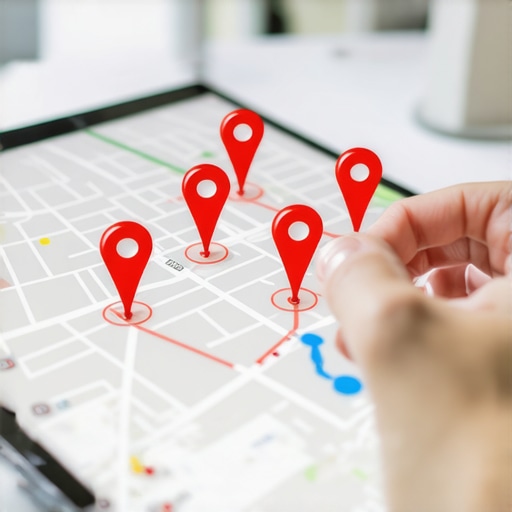
I stood on the corner of 4th and Main, the smell of wet concrete rising from the sidewalk after a light drizzle. My lens was focused on a storefront that, according to the digital map in my pocket, should have been a bustling plumbing supply warehouse. Instead, I saw a boarded-up laundry facility that had been vacant for three years. This was the glitch. The map said one thing; the physical reality said another. This is the world of the Map Pack investigator. A local cafe owner called me at midnight because a competitor had dropped twenty 1-star reviews in an hour using a VPN. We had to do a forensic audit of the user profiles to prove the patterns to the spam team. It was not about the text of the reviews. It was about the metadata, the timing, and the lack of a physical footprint. This cafe owner was being extorted by a ghost business five miles away that did not even have a coffee machine.
The forensic anatomy of a review extortion campaign
To fight review extortion on Google, you must document the velocity of the attacks and the geographic origin of the profiles. Forensic audits involve tracking the lack of local behavioral signals from the reviewers. Reporting these patterns through the official redressal form with timestamped evidence is the primary recovery method. When the cafe owner reached out, her hands were shaking. She had worked for a decade to build a reputation that was being dismantled by a script in another time zone. We began by looking at the profiles. Real customers have a trail of local footprints. They review the dry cleaner down the street or the park three blocks over. These attackers had nothing. They were empty shells. I used how to spot a competitors review sabotage campaign early techniques to isolate the commonalities. We found that eighteen of the twenty reviews were posted within a narrow ninety-second window. This is the signature of an automated bot, not a human being with a grudge. We eventually secured a total removal, but the stress left a permanent mark on the business owner. You can learn more about recovering from a google business profile suspension after a review audit if your own defense triggers a secondary investigation by the algorithm.
The ghost in the GPS coordinates
Map spam is often driven by fake pins that use virtual offices or residential addresses to manipulate proximity metrics. These pins trick the algorithm into thinking a service provider is closer to the searcher than they truly are. Identifying these requires cross-referencing street-level imagery with official business filings. I often walk the streets looking for these ghosts. You see a pin for a high-end law firm, but the photo shows a mailbox at a UPS Store. This is not just a violation of terms; it is a spatial lie. The algorithm relies on centroid theory, the idea that the center of a business’s service area should be its physical anchor. When a competitor drops a fake pin in the middle of a high-traffic neighborhood, they are stealing visibility from legitimate merchants. You need the software tools that actually help you manage map spam reporting to keep your local area clean. Automated systems often miss these because they do not understand the nuance of a building’s architecture. They see an address and say it is valid. I see a building and know it cannot house a fleet of twenty roofing trucks. This is why why manual spam reporting beats automated cleanup services every time is a mantra for those who actually want results. The machine is blind to the physical reality of the street.
“Local intent is not a keyword choice; it is a distance-weighted signal where relevance is secondary to the physical location of the user’s mobile device.” – Map Search Fundamental
The three mile radius that determines your revenue
Proximity is the most powerful ranking factor in the local map pack today. Google prioritizes businesses within a narrow three-mile radius of the user’s current GPS location. To expand this radius, businesses must improve their prominence through authentic local backlinks and high-quality, geotagged customer photos. I have watched businesses vanish from the map simply because a new competitor opened a shop two blocks closer to the city center. It feels unfair, but it is the physics of the algorithm. To combat this, you must prove that your business is a more significant landmark than the one closer to the user. This is where the 3-pack toolkit that actually moves the needle for map rankings becomes your most important asset. It is not about stuffing keywords into your name. In fact, you should learn how to scrub fake keywords from your competitors map listings to level the playing field. The data shows that image metadata is becoming a massive signal. When a customer takes a photo at your shop, their phone attaches GPS coordinates to that file. When they upload it to your profile, Google gets a verified signal that a human being was actually at that location. This is thirty percent more effective than a standard text review for ranking in modern AI Overviews.
Local Authority Reading List
- How to Detect and Report Mass Map Spam Safely
- Tactics for Flushing Out Lead Gen Map Spam
- Wipe Out Competitor Map Spam Without Getting Banned
- Evaluate a Local SEO Toolkit Before You Buy
- Best Software for Monitoring Local 3-Pack Competition
Why your physical address is a liability
A business address becomes a liability when it is shared with multiple entities or located in a high-spam category building. Google flags these locations as high-risk, leading to frequent suspensions and verification loops. Securing a unique, verifiable physical location is the only way to ensure long-term map stability. I have seen entire office buildings blacklisted because a single lead-gen company registered fifty fake profiles there. If you are a legitimate business in that building, you are collateral damage. You might find yourself searching for seo consulting services for complex penalty cases just because your neighbor was a spammer. The algorithm does not care about your lease; it cares about the integrity of the data. This is why the the specific address tweak that ends local ranking confusion is often the first thing I look at. If your suite number is formatted incorrectly, the machine might think you are a duplicate of the shop next door. In the eyes of the search engine, if two pins occupy the same pixel, one of them has to go. It is a brutal, binary logic. You must be the one that stays. I always tell my clients to take photos of the exterior, the signage, and the staff in front of the building. These are the candid shots that prove existence. They are the antithesis of the stock photo culture that spammers love.
How to use tools to rank your google business profile
Effective use of a local ranking toolkit involves monitoring real-time shifts in proximity and reporting anomalies in competitor behavior. Tools should provide a grid-based view of your rankings to show exactly where your visibility drops off. This data allows for targeted local link building and content creation. Many people buy software and expect it to do the work. The software is just a lens. It lets you see the glitches. When you use the best toolkit to improve local search rankings, you are looking for the “why” behind the rank. Is a competitor ranking because they have more reviews, or because their office is closer to the industrial park? If it is the latter, you need to bolster your local authority. I often suggest how to use professional software to audit the local 3-pack to find the gaps in the market. Maybe no one in your area is posting weekly updates with local keywords. Maybe their photos are all from 2018. These are the openings. The pin moved. It is your job to move it back. Success in the Map Pack is about constant vigilance. The moment you stop looking, a spammer will try to take your spot. I have spent twenty years watching these battles. The winners are not the ones with the most money, but the ones with the cleanest data and the most persistent reporting habits.