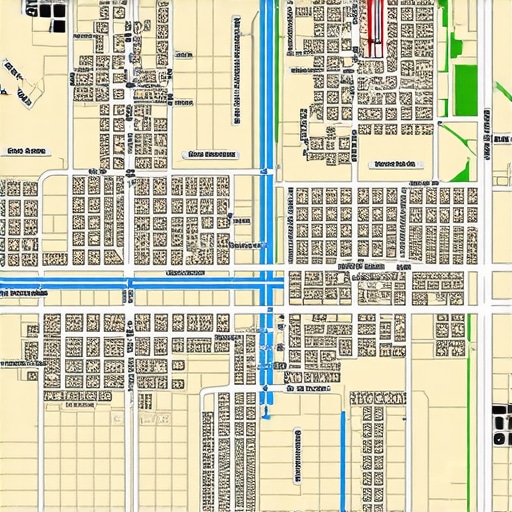
Why Your Service Area Pages Keep Failing the Local Proximity Test
If you are a plumber, an HVAC technician, or a lawyer, you’ve likely experienced the “Parking Lot Syndrome.” You open your phone while sitting at your office desk, search for your services, and – presto – you are #1 in the Google Map Pack. But the moment you drive five miles down the road into a neighboring suburb, your business vanishes. You’ve hit the Proximity Wall.
As a google business profile seo expert, I see this daily. Business owners are frustrated because their rank trackers show “green circles” across the map, yet the phone remains silent. The reality is that the January 2025 Google Local Ranking Update has fundamentally changed how service area business seo works. Google is no longer satisfied with you saying you serve an area; it now demands Local Context to prove you are actually there. If you want to rank google business profile assets effectively in 2025 and beyond, you have to stop relying on thin, templated city pages and start building entity authority.
My name is Fahed Awan, and I specialize in helping local businesses break through these invisible barriers. In this guide, we will dismantle the old ways of doing local SEO and look at the technical, contextual, and behavioral signals required to rank higher on google maps in a post-2025 landscape.
The Death of the “City + Service” Template
For a decade, the standard advice for local search optimization was simple: create a page for every city you serve. You’d take one template, swap “Plumber in Dallas” for “Plumber in Plano,” and wait for the leads to roll in. That era is officially dead. Following the major algorithm shifts of late 2024 and the January 2025 update, Google’s ability to detect “thin content” and “doorway pages” has reached a clinical level of precision.
Google’s 2025 update placed a much heavier weight on the relationship between proximity and actual service evidence. If your city page is just a wall of keyword-stuffed text with a map embed, Google views it as a low-value attempt to manipulate the index. This is why many businesses find themselves stuck in the Invisible Zone – where you might rank on organic search page two, but you are nowhere to be found in the Map Pack.
To fix this, you must move toward a model of “Local Context.” Instead of generic descriptions, your pages need to feature unique data points that prove your physical presence. This is the only way to effectively Stop Using Keyword-Stuffed City Pages and Try This Local Context Method Instead. Visibility in 2025 is earned through proof, not just prose.
Proximity vs. Prominence: Why Google Doesn’t Trust Your “Virtual” Presence
Google’s local algorithm is built on three pillars: Proximity, Relevance, and Prominence. For Service Area Businesses (SABs) that hide their address, the “Proximity” pillar becomes a massive hurdle. Google uses your verified home or office address as the “center point” of your authority. The further a user is from that point, the more “Prominence” and “Relevance” you need to overcome the distance gap.
SABs are at a natural disadvantage because they lack the “permanent signage” signal that a storefront provides. When Google’s AI evaluates your profile, it looks for “Real World Signals.” If your profile only shows activity at your home base, the algorithm will restrict your reach to a 3-to-5-mile radius. This is what we call the “Radius Wall.”
Breaking this wall requires a google maps ranking service strategy that focuses on hyperlocal seo. You need to show Google that your trucks are in those neighboring towns every day. We’ve documented exactly The Google Maps Radius Wall: How We Pushed a Service Area Profile Into Three Neighboring Towns by leveraging job-site data and specific geo-signals that tell Google, “We are the prominent choice in this zip code, regardless of where our office is located.”
3 Silent Killers of Your Service Area Rankings
Even if you have a great website, these three issues can sabotage your google business profile optimization efforts instantly:
1. NAP Inconsistency (The 2025 Edition)
In 2025, Google adjusted its algorithm to place “stronger weight on consistent NAP (Name, Address, Phone) data.” It’s not just about having the same phone number anymore; it’s about the entity relationship. If your Facebook page says you serve “Greater Houston” but your GBP says “Houston, TX,” that slight discrepancy in service area definitions can cause a ranking drop. Use a professional google business profile seo tool to audit your citations and ensure your digital footprint is 100% congruent.
2. The “Ghosting” Bug
Have you ever noticed your rankings disappear after 5:00 PM? Or perhaps you rank in the morning but not in the afternoon? This is often tied to your “Open Hours” and how Google perceives your availability relative to your competitors. If a competitor is “Open 24/7” and you are “Closed,” Google will often ghost your profile in favor of the active business to provide a better user experience. This is one of the 4 Fixes for Profiles That Only Rank When You Are Standing at the Business Address.
3. Lack of Hyperlocal Proof
Google needs to see you actually working in the city you claim to serve. If all your uploaded photos are from your warehouse or your backyard, you aren’t providing geo-relevance. To improve google maps ranking, you need to upload photos of your team at recognizable local landmarks or in front of street signs in your target service areas. You can use local seo software to track how these geo-specific uploads correlate with ranking shifts in specific zip codes.
The “Local Context” Method: How to Rank Where You Aren’t
To bypass the proximity filter, you need to move from “Service Area” to “Service Evidence.” Here is the framework I use for my google maps ranking service clients:
- The Truck Magnet Photo Hack: Take high-resolution photos of your branded vehicle in the specific neighborhoods you want to rank in. Google’s Vision AI can read the text on your truck and identify the background landmarks, creating a powerful “Local Context” signal.
- Neighborhood-Specific Reviews: Don’t just ask for a review. Ask the customer to mention their neighborhood. “Fahed did a great job on our roof in Silverlake, Pearland” is worth ten generic “Great service” reviews.
- Hyperlocal Mentions: On your city page seo, don’t just talk about the city. Talk about the local high school, the neighborhood park, or the specific traffic issues in that area. This proves to Google that the content wasn’t written by a generic AI in another country.
Data from early 2025 shows that businesses with incomplete or “generic” profiles were systematically dropped from the Local Pack in favor of those with high “Entity Density.” You can’t just set it and forget it. You need to constantly feed the algorithm fresh, local data. If you are struggling to see results, it might be time for a How to fix the proximity gap and rank outside your immediate neighborhood deep dive.
Furthermore, stop chasing “Map Pins” and start focusing on authority. Many “cheap” services offer thousands of map embeds, but these are often ignored by modern filters. Instead, learn How to build profile authority without buying risky map link packages to ensure long-term stability.
Technical Fixes: Schema and Geo-Signals
While content is vital, the technical “handshake” between your website and Google is what solidifies your local map pack seo. Most businesses use basic “LocalBusiness” schema, but that isn’t enough for a Service Area Business.
You need to utilize ServiceArea and GeoShape properties within your JSON-LD. This tells Google’s crawler exactly where your “polygon” of service lies. However, be careful – over-optimizing these coordinates can sometimes backfire if they don’t match your GBP settings. This is a common pitfall where Why Most Local Schema Markup Fails to Prove Your Business Location.
Additionally, ensure your website’s geo targeted seo includes hasMap properties and links to your google maps ranking service profile. This creates a closed loop of data that reinforces your entity. For those looking for an edge, using advanced GBP ranking tools can help you identify exactly which schema triggers are moving the needle for your competitors.
Don’t forget the importance of mobile speed and UX. In 2025, if your city page takes more than 2 seconds to load on a 4G connection, Google will likely demote you in the mobile Map Pack, regardless of your proximity. Use local seo tools to monitor your mobile performance across different nodes in your service area.
Conclusion: Breaking the Proximity Wall
The “Proximity Wall” is not an impassable barrier; it is a filter designed to weed out low-effort businesses. By shifting your strategy from “keyword stuffing” to “Local Context,” you can expand your reach and rank google business profile assets in cities miles away from your home office.
Remember, your rank tracker might show you at the top, but you need to verify that real users are seeing you. If you’ve wondered Why Your Rank Tracker Shows Green Circles While Your Phone Stays Silent, it’s almost certainly a proximity or relevance mismatch.
Stay ahead of the curve by implementing these 7 Google Business Profile Tips for 2026 That Put You Ahead of the AI Spam Wave. If you’re ready to stop guessing and start growing, it’s time to invest in a professional google maps ranking service that understands the nuances of the 2025 algorithm.
Don’t let your competitors own the neighborhoods you serve. Audit your profile, fix your schema, and start providing the “Local Context” that Google craves.