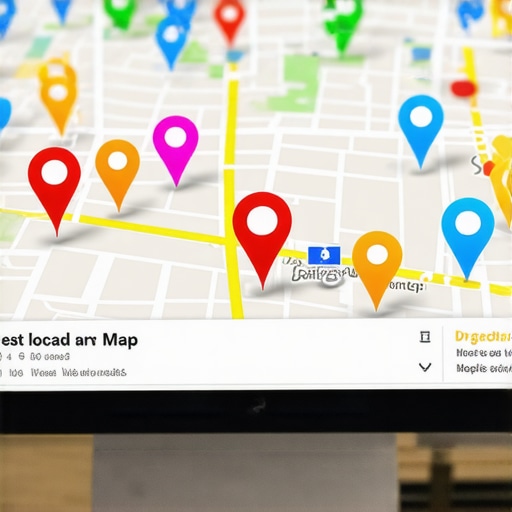
I stood on a rain-slicked corner in downtown Chicago, smelling the sharp, metallic scent of wet concrete while staring at a building that did not exist on my phone. My digital map insisted a high-volume plumbing firm operated from Suite 402, but the physical structure was a vacant lot filled with rusted rebar and discarded soda cans. This was the moment I realized the local search ecosystem is a hallucinatory layer of data superimposed over reality. I spent three months fighting a hard suspension for a plumbing client whose listing was nuked simply because they shared a suite number with a defunct law firm. Google did not want proof of a van; they wanted proof of a utility bill under the exact GPS pin, a forensic demand for physical truth in a sea of digital lies. This is the reality of the hyper-local layer. You are not just fighting for a keyword. You are fighting for a coordinate. If your software does not understand the difference between a centroid and a service area polygon, you are already losing a war you do not even realize you are fighting.
The ghost in the GPS coordinates
A GMB ranking toolkit must utilize precise coordinate data and proximity-weighted signals to reveal real-time competitor density and centroid shifts. Most basic tracking software gives you a single point of data from a static server, which is essentially useless for local businesses. To find your real competition, you need a view from the street. You need to know how to verify if your rank tracker is seeing local search intent as it fluctuates by the meter. I have seen businesses dominate a city from their office but vanish the moment a user walks two blocks east. This is the proximity shift, a mathematical weighting that cares more about the user’s mobile device location than the quality of your backlinks. If you are not using a tool that tracks rank across a grid of coordinates, you are looking at a map through a pinhole. You must understand that why your rank tracker shows a 3-pack that doesnt exist for customers is often due to the software failing to simulate the physical movement of a human being through space. Local search is not a flat plane; it is a pressurized environment where every step a user takes reorders the results. This is why you need a specialized the 3-pack toolkit that actually moves the needle for map rankings to see the real landscape of your market.
“Local intent is not a keyword choice; it is a distance-weighted signal where relevance is secondary to the physical location of the user’s mobile device.” – Map Search Fundamental
Why your physical address is a liability
Over aggressive location page strategy penalties occur when businesses create low-value gateway pages to capture traffic in cities where they lack a physical footprint. Many agencies attempt to bypass the physics of proximity by building hundreds of thin pages for every suburb. Google’s algorithm has become incredibly efficient at detecting this pattern. If you are hit, you need seo services to fix over aggressive location page strategy penalties by consolidating your authority and focusing on actual service area signals. The algorithm looks for the forensic trace of your operations. It looks for customer photos, check-in data, and regional review sentiment. When you spread your relevance too thin, you create a transparency that the Map Pack filters out. This is also why you might see why your location strategy is getting your listings merged by mistake. If Google cannot differentiate between your multiple branches because your data lacks local specificity, it will simply pick one and hide the others. You need to be looking at the local seo software that actually tracks proximity trends to see exactly where your authority ends and where you are being filtered out of the results.
Local Authority Reading List
- Tactics for flushing out lead generation map spam
- The map spam fighting guide for service area businesses
- Software tools for managing map spam reporting
- Scrubbing fake lead gen pins without getting banned
- Software that finds hidden map spam in your area
Detecting the shadows of competitor map spam
Competitor GMB spam attacks involve keyword stuffing, fake reviews, and address rentals designed to crowd out legitimate local businesses. I once investigated a legal niche where a single competitor had registered fifteen virtual offices in one building. They were using VPNs to simulate local searches and verify listings. To fight back, you need seo services to detect and fight competitor gmb spam attacks that utilize historical data audits. You have to look for the glitches. Are their reviews coming in at 3:00 AM? Is their business name an exact match for a high-volume search term that violates Google’s terms of service? You can learn how to outmaneuver competitors who use keyword stuffed business names by reporting them systematically rather than screaming into the void. Using the right software tools that actually help you manage map spam reporting allows you to track the status of your redressal forms. Automated cleanup often fails because it lacks the nuance of a human investigator. You need a manual touch to prove that the business at 123 Main Street is actually a UPS Store mailbox. This is why why manual spam reporting beats automated cleanup services every time in high-stakes markets.
The toolkit that actually moves the needle
A GMB ranking toolkit is a specialized suite of software designed to monitor proximity trends, audit local citations, and track Map Pack positions across multiple coordinates. It is the difference between a compass and a GPS. When people ask what is a gmb ranking toolkit, they are usually looking for a shortcut. The truth is that the best local seo tools for google business profile are the ones that give you raw, unwashed data from the local layer. You need to see the map tracking tools that give the most accurate local data for 2026 to stay ahead of algorithm shifts like ‘Vicinity’. These tools show you the heat maps of your rankings. They show you exactly where your listing falls off a cliff. If your software tells you that you are number one in the whole city, it is lying to you. You are number one at your office. Two miles away, you are number seven. You need how to find map trackers that show the real 3-pack for your area to understand your true visibility. This data is the foundation of any strategy to increase local leads from google maps because you cannot fix what you cannot see.
“Relevance is secondary to the physical location of the user… the algorithm favors the proximity beacon over the traditional authority signal.” – The Spatial Search Review
Recovering from the mass review removal ghost
SEO services for review removal recovery focus on proving the legitimacy of genuine customer feedback through activity logs and transaction proof. Google occasionally runs a sweep that nukes legitimate reviews alongside the spam. This happens when their AI detects a pattern it dislikes, even if that pattern is just a sudden surge of happy customers. If you are a victim, you need seo services to fix gmb rankings after mass review removal to restore your prominence. Your ranking power is tied to your review count and sentiment. When those vanish, your proximity radius shrinks. You must understand the impact of mass review removals on local search prominence to realize the urgency of the situation. Recovering involves more than just asking for new reviews. It requires reputation management and review repair services that focus on long-term trust building. You may need to use a how to recover your map position after google nukes your reviews protocol that involves submitting receipts or proof of service to the support team. Avoid the problem with using cheap review cleanup services for your profile, as these often use the same bot patterns that got you flagged in the first place.
Multi location logistics and the uniform data wall
A local SEO toolkit for multi location businesses must centralize NAP data and provide granular proximity reporting for each individual branch listing. Managing fifty locations is not just fifty times the work; it is a exponential increase in data entropy. You need a local seo toolkit for multi location businesses that alerts you the second a competitor opens a new pin near one of your stores. If your data is inconsistent, you risk why your multi location business needs a uniform data strategy failing and causing internal competition between your own pins. This is where the toolset that makes managing 50 local listings simple becomes a requirement for survival. You also need to watch for how duplicate profiles are quietly sabotaging your local traffic. Often, a well-meaning manager creates a second listing that splits your ranking power. You need to use the local seo checklist for businesses with multiple service areas to ensure every pin is pulling its own weight. If you are expanding, follow the expansion protocol keeping your rank when adding new locations to prevent a sudden drop in your original rankings.
The 404 error that kills your map visibility
Technical errors on your website, specifically broken internal links and 404s, directly degrade the prominence signal of your Google Business Profile. Many business owners assume their website and their map profile are separate entities. They are not. If your profile links to a broken contact page, your ranking will tank. You must understand why your local profile rank is tied to your sites 404 error count to appreciate the technical side of local SEO. Fixing these is a priority. You need how to fix the 404 errors dragging down your local profile rank before you spend another dollar on ads. The algorithm views a broken site as a sign of an abandoned business. It is a trust signal that tells Google you are no longer a reliable option for the user. This extends to redirects as well. You should learn how to fix broken redirects that confuse googles local mapping bot. Even small issues like why broken links on your contact page destroy your map prominence can have outsized effects on your bottom line. Always use how to fix the 404 errors that are tanking your map conversion rate as your first step in any technical audit.
The physics of business hours and trust
Inconsistent business hours history triggers silent suspensions and reduces visibility during ‘near me’ searches where immediate availability is a ranking factor. If you change your Saturday hours for a holiday and forget to change them back, Google notices. You need to know how to audit your business hours history to prevent a silent suspension because frequency of change is a risk signal. The the impact of a clean business hours history on your local trust score is massive for high-intent queries. If Google thinks you might be closed, it will not risk showing you to a customer who is currently driving. This is the truth about the near me search and your profiles hours history. It is about reliability. If you have a bug where your hours keep resetting, you need fixing the inconsistent hours bug before google flags your profile immediately. A messy history leads to a profile that vanishes when you need it most. Use why your profile vanished after changing your saturday hours slightly as a cautionary tale for your management team. Consistency is the only way to maintain a high trust score over time.
Backlink health and the local authority trap
Toxic backlinks from low-quality local directories can act as a silent killer for Map Pack authority even if your on-page SEO is perfect. Not all citations are good citations. If you are using a cheap service to blast your business into every directory in existence, you are probably doing more harm than good. You need to understand why toxic backlinks are the silent killer of local profile authority. Cleaning this up is a meticulous process. You should follow the toxic link cleanup process that restored our clients map rank to recover your standing. It is about quality over quantity. In fact, why local citations matter less than your overall backlink health is a hard truth many agencies ignore. You need to learn how to identify and disavow toxic local backlinks before a penalty hits. If you have already been hit, use the strategy for fixing a map profile hit by a toxic link penalty to rebuild. A clean profile is a powerful profile. Do not let why toxic links from local directories are hurting your visibility be the reason your competitors are outranking you with half the effort.