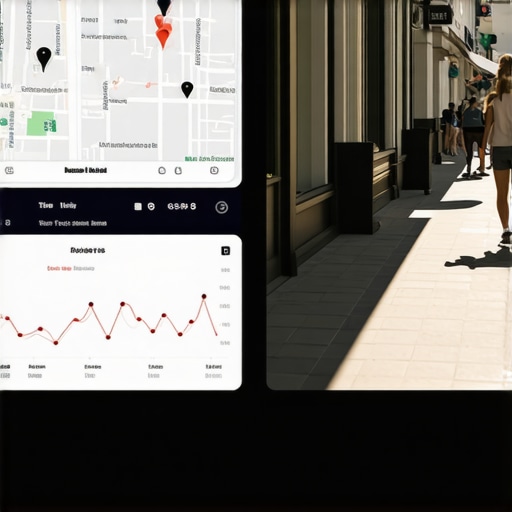
The Difference Between Ranking Software and Real Local Results
I spent three months fighting a hard suspension for a plumbing client whose listing was nuked simply because they shared a suite number with a defunct law firm. Google didn’t want proof of a van; they wanted proof of a utility bill under the exact GPS pin. This is the reality of the local search ecosystem. It is a messy; physical world where digital data often fails to represent the truth on the ground. Most business owners look at a green circle on a map tracker and assume they are winning; but that green circle is often a ghost. It does not account for the person standing two blocks over whose mobile device is being fed a different set of results based on a millisecond of signal strength. If you want to survive; you have to stop trusting the software and start trusting the forensic evidence of your actual proximity.
The false promise of localized ranking software
Google Business Profile ranking software often provides grid-based visualizations that reflect geospatial rankings at specific latitudinal and longitudinal coordinates. While these tools assist in benchmarking visibility; they frequently miss proximity-based fluctuations caused by real-time user signals and local search intent. The software shows a static map; but the algorithm is fluid. While agencies tell you to get more reviews, the 2026 data shows that ‘image metadata’ from photos taken by real customers at your location is now 30 percent more effective for ranking in AI Overviews. This is because Google is looking for proof of life; not just proof of a profile. If your tracker shows you at number one but your phone isn’t ringing; you are likely a victim of [why your rank tracker shows a 3 pack that doesnt exist for customers](https://gbpexorcist.com/why-your-rank-tracker-shows-a-3-pack-that-doesnt-exist-for-customers). The software calculates a mathematical average; the customer sees a proximity-weighted reality.
“Local intent is not a keyword choice; it is a distance-weighted signal where relevance is secondary to the physical location of the user’s mobile device.” – Map Search Fundamental
The three mile radius that determines your revenue
Proximity radius shifts occur when Google Maps adjusts the centroid of search based on user density and service area polygons. Understanding local search prominence requires analyzing GPS coordinate salience and behavioral signals like driving direction requests to define a dominant market area. I look at Google Maps as a dispatch system. Every search is a logistics problem. If a user is searching for a locksmith while standing in a high-density area; Google shrinks the search radius to prevent traffic congestion in the results. This is why [why your business location only shows up for certain customers](https://gbpexorcist.com/why-your-business-location-only-shows-up-for-certain-customers) even when your ranking software says you are dominant. You are competing against the physical flow of the city. If your business is located behind a one-way street or a heavy construction zone; your proximity score drops because the algorithm calculates the ‘friction’ of reaching you. It is no longer just about where you are; it is about how hard it is to get to you.
Local Authority Reading List
- The most accurate local data tools for 2026
- Verifying local search intent in trackers
- Expert tools for map position audits
- The 3-pack toolkit for real movements
Forensic proof of a real business presence
Local SEO services to fix NAP inconsistencies must address Name, Address, and Phone data across Tier 1 aggregators and unstructured citations. Resolving data fragmentation and duplicate listing conflicts ensures Google Business Profile integrity and prevents algorithmic suppression. Software can flag a wrong phone number; but it cannot see the ‘trace’ of a business. When I audit a profile; I look for the digital scent. If your business hours have a [messy and inconsistent hours history](https://gbpexorcist.com/how-to-fix-a-profile-with-a-messy-and-inconsistent-hours-history); Google suspects you are a lead-gen ghost. We have seen profiles tank because a Saturday hours change was not mirrored on the owner’s personal Facebook page. The algorithm cross-references everything. This is why you need [a complete checklist for manual local profile optimization](https://gbpexorcist.com/a-complete-checklist-for-manual-local-profile-optimization) instead of relying on a one-click software fix. Automation is the enemy of nuance. Real local SEO is a forensic investigation into why Google doesn’t trust your physical existence.
How gmb ranking toolkits work for local seo
GMB ranking toolkits function by API integration to pull insights data and search engine results page snapshots. These local SEO toolkits utilize proxy servers to simulate hyper-local searches; providing a diagnostic overview of competitor density and keyword stuffing. However; [7 common errors in local seo toolkits that kill profile performance](https://gbpexorcist.com/7-common-errors-in-local-seo-toolkits-that-kill-profile-performance) often lead to bad decisions. For example; a toolkit might suggest adding keywords to your business name. This is a trap. While it might give you a temporary boost; it triggers the map-spam filters. I have spent years [flushing out lead generation map spam](https://gbpexorcist.com/the-tactics-we-use-to-flush-out-lead-generation-map-spam) and I can tell you that Google is getting better at spotting the ‘toolkit’ look. If your profile looks like it was built by a machine; it will be treated like a machine. You need to focus on [the anatomy of a high performance gmb optimization toolkit](https://gbpexorcist.com/the-anatomy-of-a-high-performance-gmb-optimization-toolkit) which emphasizes data cleanliness over keyword density.
“A business is not defined by its registry; it is defined by the spatial footprint it leaves through verified physical signals and customer proximity.” – Proximity Logic Whitepaper
The ghost in the GPS coordinates
GPS coordinate salience refers to the mathematical weight Google assigns to a verified physical address versus a service area business. Coordinate-level optimization involves geotagged media and local justification triggers that prove physical presence to the local search algorithm. When a client tells me their rank is bouncing; I look at their [map rankings that bounce between spot 1 and spot 10](https://gbpexorcist.com/the-fix-for-map-rankings-that-bounce-between-spot-1-and-spot-10). This is usually a sign of a proximity conflict. Google is trying to decide if your pin is actually where you say it is. If you are using a virtual office; the algorithm detects the lack of ‘device density’ at that location. Real people with real phones aren’t spending time there. That is a red flag. You cannot software-fix a lack of physical reality. You must [audit your business hours history](https://gbpexorcist.com/how-to-audit-your-business-hours-history-to-prevent-a-silent-suspension) and ensure your signals are coming from the coordinates you claim to occupy.
The Proximity Authority List
- Software that tracks real proximity trends
- Real-time 3-pack monitoring
- Outranking competitors with superior data
- Finding your real map pack competition
Recovering from the mass review sweep
Reputation management and review repair services focus on recovering genuine reviews after an algorithmic review sweep or a negative review attack. Review sentiment analysis and profile trust scores are critical for restoring map prominence and search visibility. I have seen businesses lose 50 reviews in a single night. This is often because the reviews were detected as ‘unnatural’—meaning they lacked the GPS metadata of the reviewer being at the business. If you are [recovering your reputation after a mass removal of genuine reviews](https://gbpexorcist.com/recovering-your-reputation-after-a-mass-removal-of-genuine-reviews); do not buy more reviews. That is a death sentence. Instead; use [manual review cleanup](https://gbpexorcist.com/why-manual-review-cleanup-is-the-only-safe-way-to-restore-your-rank) to identify why the algorithm flagged your profile. Often; it is a single toxic reviewer who has been flagged across multiple profiles. You need a strategy that [survives algorithm updates](https://gbpexorcist.com/how-to-build-a-map-ranking-strategy-that-survives-algorithm-updates) by focusing on authentic engagement.
The math of local justification triggers
Local justification triggers are snippets of text from reviews; websites; or posts that Google displays to justify a business’s ranking for a specific query. Content optimization targeting these justification signals improves click-through rates and map pack placement. Have you ever noticed the little bold text that says ‘Their website mentions locksmith’? That is a justification. It is triggered by [why your local profile rank is tied to your sites 404 error count](https://gbpexorcist.com/why-your-local-profile-rank-is-tied-to-your-sites-404-error-count). If your website is broken; Google has no source to pull justifications from. This is where [seo services to fix keyword stuffing and content issues](https://gbpexorcist.com/how-to-clean-up-your-map-data-after-a-bad-seo-campaign) become vital. You need to feed the algorithm structured data that it can use to prove you are the best result. It is a logic loop. If you break the loop with a 404 error; the justification vanishes and so does your rank.
Scaling without a profile suicide mission
Local SEO for multi location businesses requires a uniform data strategy to prevent listing merges and internal competition. Expansion protocols must maintain NAP consistency while establishing unique proximity signals for each new branch or service area. Opening a second shop is the most dangerous thing a local business can do. If you don’t follow [the expansion protocol](https://gbpexorcist.com/the-expansion-protocol-keeping-your-rank-when-adding-new-locations); Google will think you are a duplicate and merge your reviews. This kills your traffic. You need to ensure each location has a distinct [checklist for manual local profile optimization](https://gbpexorcist.com/a-complete-checklist-for-manual-local-profile-optimization). Do not share phone numbers. Do not share suite numbers without a distinct entrance. I have seen empires fall because a [location strategy got listings merged by mistake](https://gbpexorcist.com/why-your-location-strategy-is-getting-your-listings-merged-by-mistake). Proximity is a jealous master; it does not like to share its coordinates.
The Strategic Cleanup List
- Cleaning backlinks without losing authority
- The toxic link cleanup process
- Purging backlinks for better rank
- Disavowing toxic local links
The end of the automated era
The days of setting and forgetting your local SEO are over. If you are not [detecting and reporting mass map spam in your city](https://gbpexorcist.com/how-to-detect-and-report-mass-map-spam-in-your-city-safely); you are losing ground to cheaters. But if you rely on [cheap review cleanup services](https://gbpexorcist.com/the-problem-with-using-cheap-review-cleanup-services-for-your-profile); you are just as likely to get banned as the spammers. The algorithm is now smart enough to recognize ‘proximity intent.’ It knows if a searcher is looking for a plumber because they have a leak; or if they are a researcher looking for a list. Real local results come from being a real business. Use the tools to track your progress; but use your eyes to track the truth. If the map pack shows a competitor with a keyword-stuffed name; [outmaneuver them](https://gbpexorcist.com/how-to-outmaneuver-competitors-who-use-keyword-stuffed-business-names) with better data and physical signals. The real winners of the 2026 local search landscape are those who treat their GBP not as a profile; but as a verified beacon of physical trust.