
Stop Letting Toxic Data Suppress Your Local Rankings
Purging the bad data haunting your local rankings.
Your Google Business Profile is bleeding visibility due to rogue edits, duplicate listings, and competitor spam. We perform a forensic extraction of bad data to force the algorithm to rank you in the Las Vegas 3-pack. No fluff, just ruthless optimization.
Forensic Data Purging for the Local Algorithm
🎯 Spam Competitor Takedowns
We actively hunt and report keyword-stuffed, fake competitor listings pushing you down the map pack. We use Google’s Redressal form to terminate their visibility and reclaim your market share.
🗑️ Duplicate Listing Eradication
Zombie profiles confuse the algorithm and dilute your ranking power. We merge or permanently delete rogue duplicate listings that are cannibalizing your primary GBP.
🧽 Citation Scrubbing
Bad Name, Address, and Phone data across tier-1 directories acts like an anchor on your local trust score. We manually audit and overwrite toxic citations across 50 primary data aggregators.
🔒 Rogue Edit Reversals
Competitors and malicious users suggest edits to your hours, categories, and website links. We lock down your core data and reverse unauthorized changes within 24 hours.
⚙️ Algorithmic Category Injection
Most businesses use the wrong primary category or miss secondary categories entirely. We analyze the top 3 ranking profiles in Las Vegas and inject the exact category hierarchy the algorithm currently favors.
The 3-Phase GBP Exorcism Protocol
1
Run Diagnostic Grid Scan
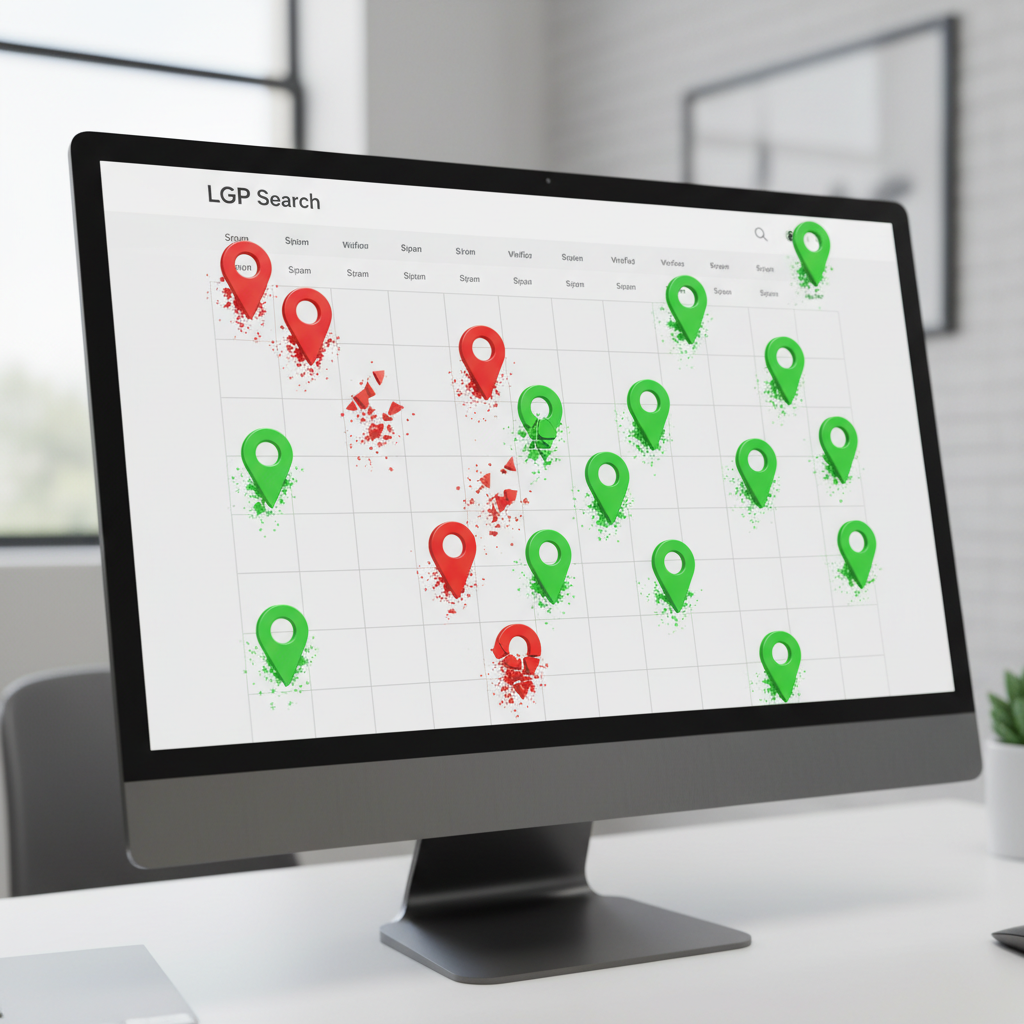
We execute a 42-point forensic grid scan on your Las Vegas service area. This exposes exactly which duplicate listings, toxic citations, and competitor spam are suppressing your map rankings.
2
Purge Toxic Data
We execute the cleanup by reporting fake competitors, deleting zombie profiles, and locking your NAP data at the aggregator level. This ensures rogue edits automatically fail.
3
Inject Optimization Code
With the bad data eradicated, we inject high-EXIF images, exact-match category codes, and structured Q&A data. Your profile is now primed to dominate the local 3-pack.
Algorithmic Suppression Reversed

Personal Injury Firm, Las Vegas
Before: Suppressed to position 14 due to 3 unverified duplicate listings and a suspended primary profile.
After: Duplicates purged and profile reinstated, ranking position 2 for car accident lawyer.
⏱ 14 Days
HVAC Contractor, Henderson
Before: Losing 60% of call volume to 5 fake, keyword-stuffed competitor listings in their immediate radius.
After: Terminated 4 fake competitor listings via Redressal, reclaiming position 1 for AC repair.
⏱ 21 Days
Emergency Plumber, Summerlin
Before: Inconsistent NAP data across 40 directories caused Google to drop them from the local pack entirely.
After: Scrubbed 40 toxic citations, resulting in a 312% increase in direct GBP calls.
⏱ 45 Days
Tactical GBP Optimization Services

🕵️ Competitor Spam Reporting
We build forensic dossiers on fake listings in your Las Vegas radius. We submit undeniable proof to Google to get them suspended.
🔗 Duplicate Profile Merging
We locate every rogue variation of your business name on Google Maps. We force the algorithm to merge them, consolidating your ranking power into one entity.
🧼 NAP Data Scrubbing
We access the primary data aggregators feeding Google its information. We overwrite incorrect addresses and phone numbers that are destroying your local trust score.
⚖️ Suspension Reinstatement
If Google deactivated your profile, we find the exact policy violation causing the issue. We submit the exact documentation required to force a reinstatement.
🗺️ Grid Tracking & Analytics
We deploy localized geo-grid trackers across a 5-mile radius of your office. You see exactly where you rank block-by-block, not just a useless city-wide average.
🧠 Entity Optimization
We structure your GBP services, products, and Q&A sections using exact-match schema logic. We feed the algorithm the precise data points it requires to rank you first.
Frequently Asked Questions
How long does it take to see ranking movement after a GBP cleanup?
You will see geo-grid ranking shifts within 14 to 28 days after we purge the toxic data. Once duplicate listings are deleted and fake competitors are suspended, the algorithm recalibrates your local authority fast.
Why did my Google Business Profile suddenly drop out of the 3-pack?
You were either hit by a rogue user edit changing your core data, or a competitor flooded your radius with fake, keyword-stuffed listings. We run a diagnostic scan to pinpoint the exact cause and reverse it.
Can I just report fake competitors myself?
You can click suggest an edit, but Google’s automated system ignores 90% of those requests from standard accounts. We compile forensic evidence and submit it through the formal Redressal complaint system for guaranteed manual review.
What makes your approach different from standard local SEO agencies?
My background is in algorithmic trading at Verition Fund Management, where bad data costs millions. I apply that exact forensic mindset to local search. We do not write fluffy blog posts; we eradicate the toxic data suppressing your map rankings.
Stop Bleeding Leads to Fake Competitors
Every day you let toxic data sit on your profile, the algorithm penalizes your Las Vegas business. Let us purge the errors and force your profile back into the 3-pack.
Written & Reviewed By

Connor Pricoli
Trader at Verition Fund Management LLC
Connor Pricoli is a seasoned professional with a deep background in global macro analysis and operational strategy,
Latest from Our Blog

3 Critical Flaws Your Automated Profile Audit Always Overlooks
3 Critical Flaws Your Automated Profile Audit Always Overlooks There is a dangerous trend in the world of local search:…

Stop Using Keyword-Stuffed City Pages and Try This Local Context Method Instead
Stop Using Keyword-Stuffed City Pages and Try This Local Context Method Instead If your current local SEO strategy involves churning…

The Med Spa Booking Trap: Why High Review Counts Aren’t Fixing Your Rank
The Med Spa Booking Trap: Why High Review Counts Aren’t Fixing Your Rank The Med Spa Booking Trap: Why High…